High-Conductivity
Titanium-Clad Copper
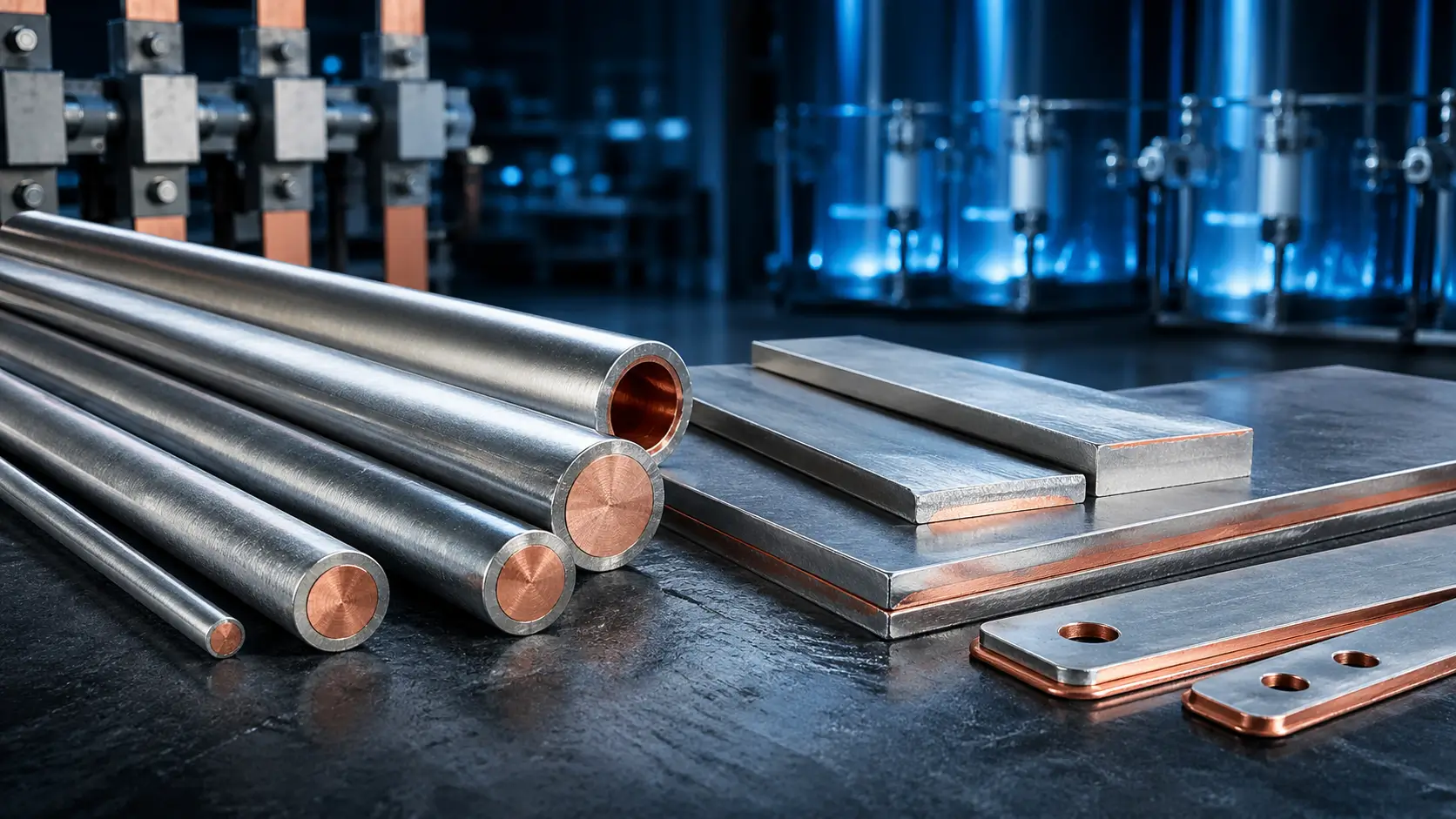
Engineered for maximum current transfer and absolute chemical immunity. We manufacture explosively and metallurgically bonded Ti-Cu bars, rods, plates, and custom profiles designed for electroplating, chlor-alkali cells, marine grounding, and aggressive chemical processing.
Your OEM Partner for Metallurgically Bonded Ti-Cu Composites
The ultimate industrial balance: copper conductivity + titanium immunity.
Hele Titanium manufactures high-performance titanium-clad copper components engineered to eliminate galvanic corrosion and prevent interface delamination under severe thermal and electrical loads.
Using advanced explosive bonding and precision hot-roll techniques, we fuse an OFHC or high-conductivity copper core with an inert titanium outer layer, creating a composite that combines massive current-carrying capacity with long-term chemical immunity.
From custom-milled busbars for chlor-alkali systems to heavy-duty rods for electroplating lines, we engineer Ti-Cu profiles that reduce power loss, extend lifecycle performance, and integrate directly into demanding OEM equipment.
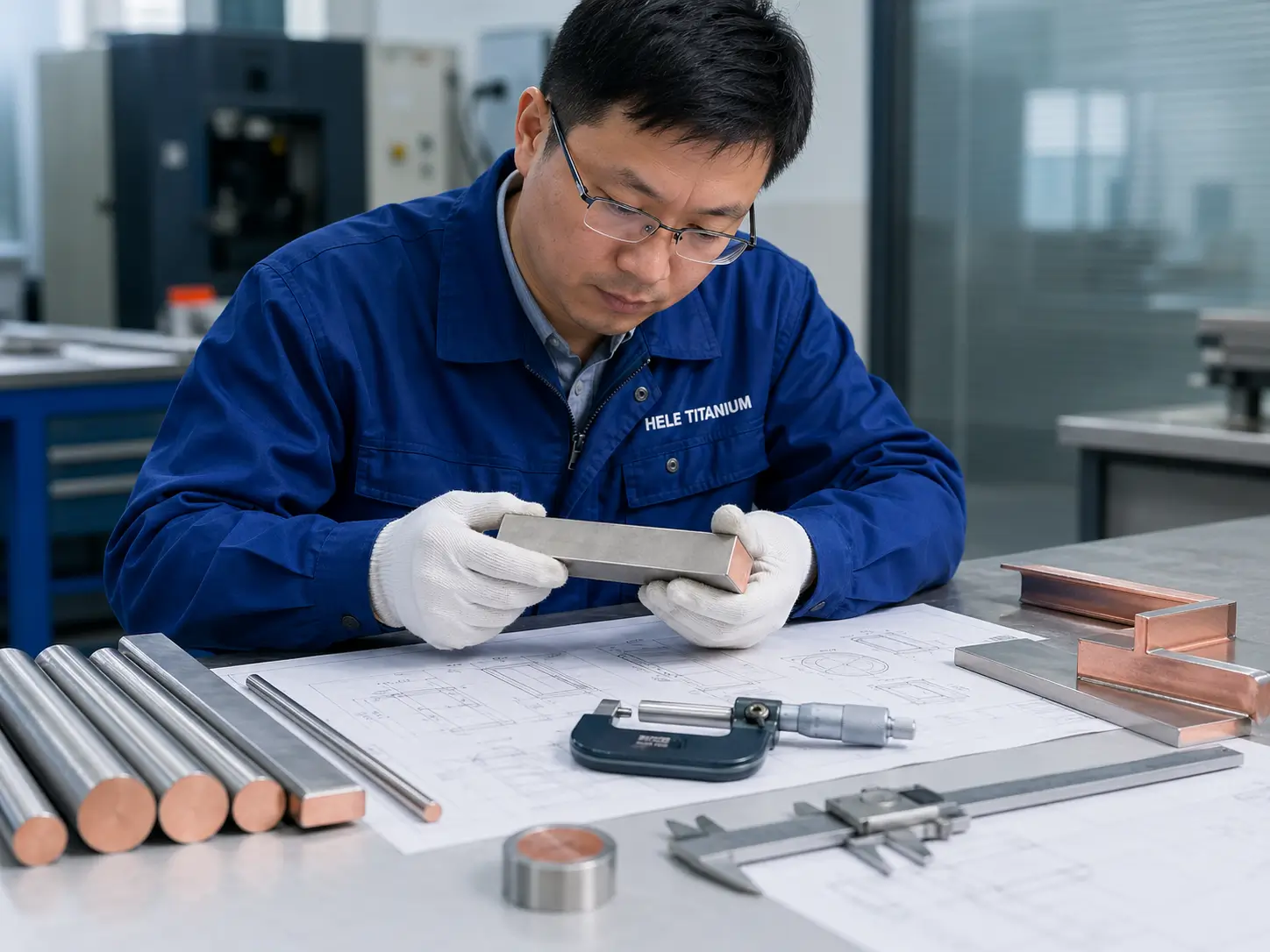
Titanium-Clad Copper Series: Maximum Conductivity, Zero Corrosion
From high-amperage busbars to bespoke electrochemical profiles, our explosive and metallurgical bonding processes are engineered to prevent interface delamination while delivering stable conductivity in severe corrosive service.
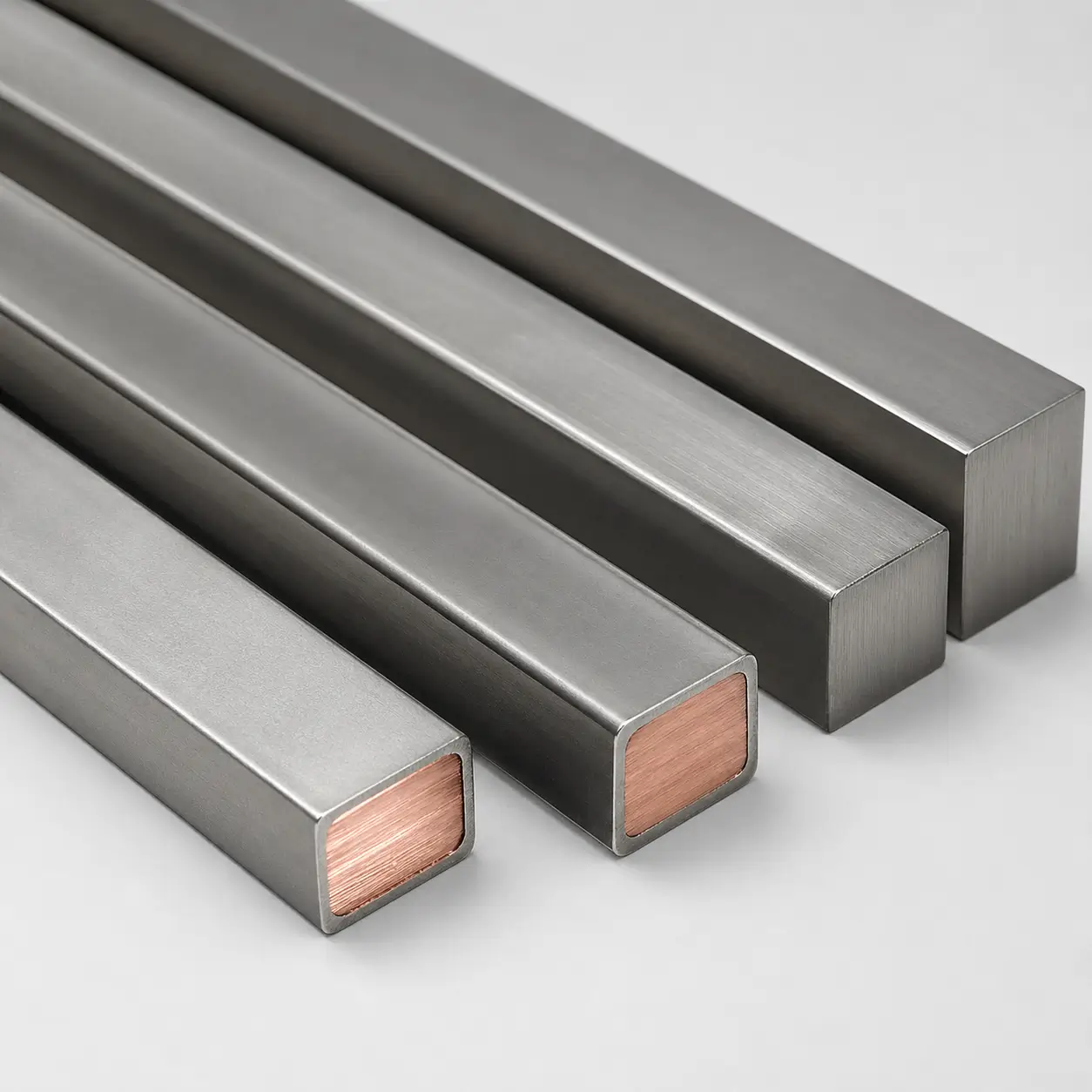
Titanium-Clad Copper Bars
C11000/OFHC Core + Gr2 Ti
Best for high-amperage conductor networks
Delivers copper-level current transfer with a titanium shield that resists corrosive attack in severe electrochemical service.
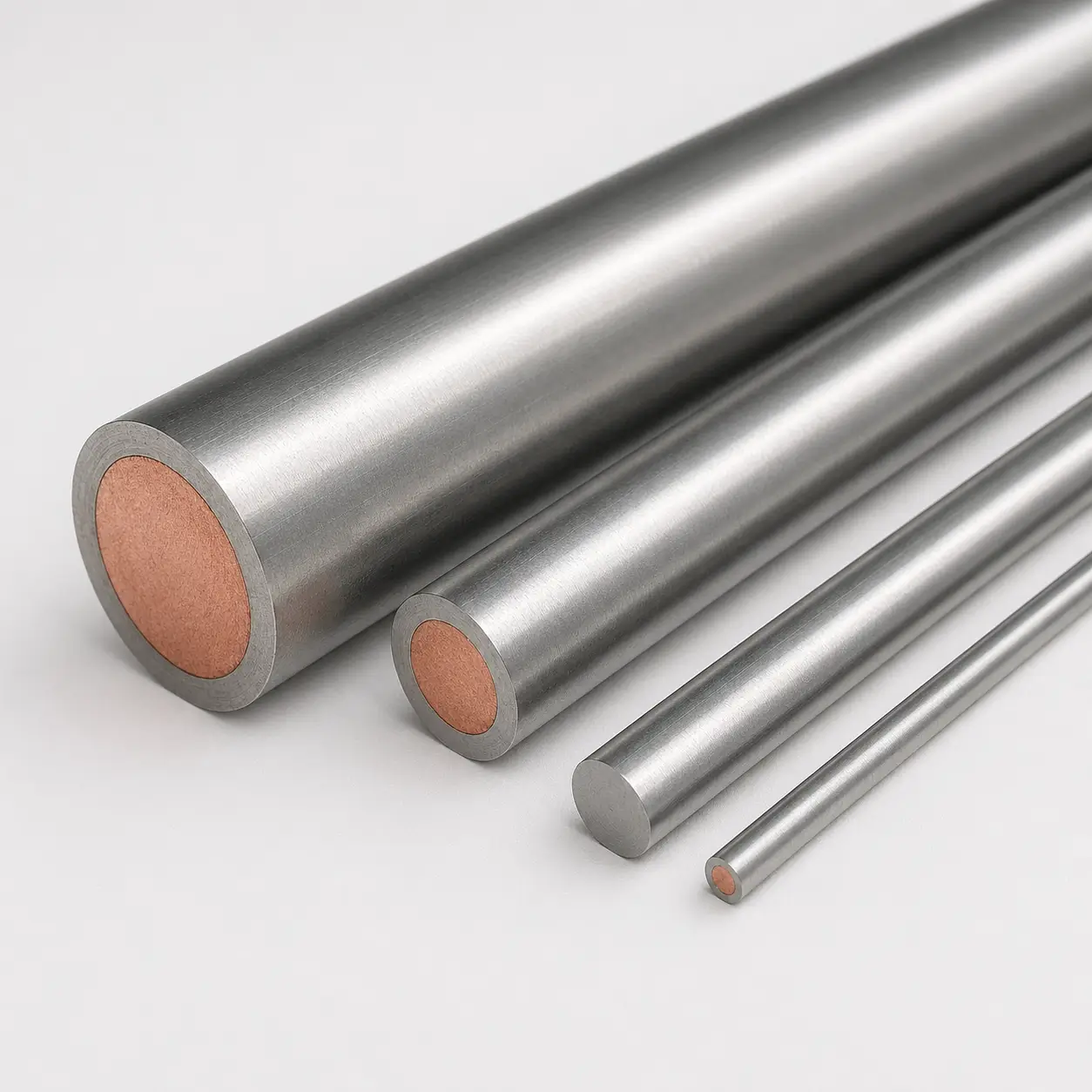
Titanium-Clad Copper Rods
Ø10–100mm | 0.5–3.0mm Ti Wall
Best for PCB plating lines & chlor-alkali
Compact cylindrical conductor profiles engineered for long-life current transfer in aggressive process media.
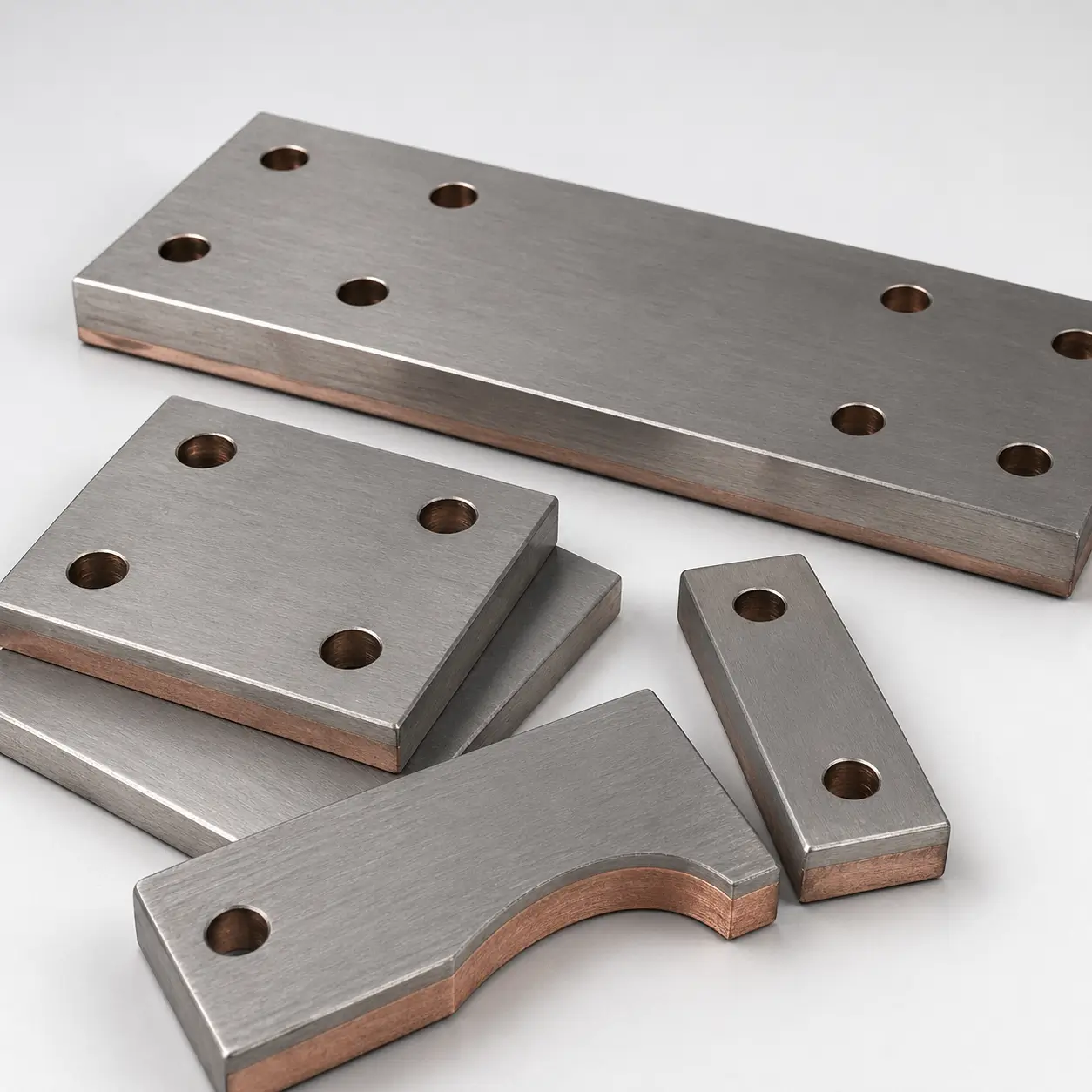
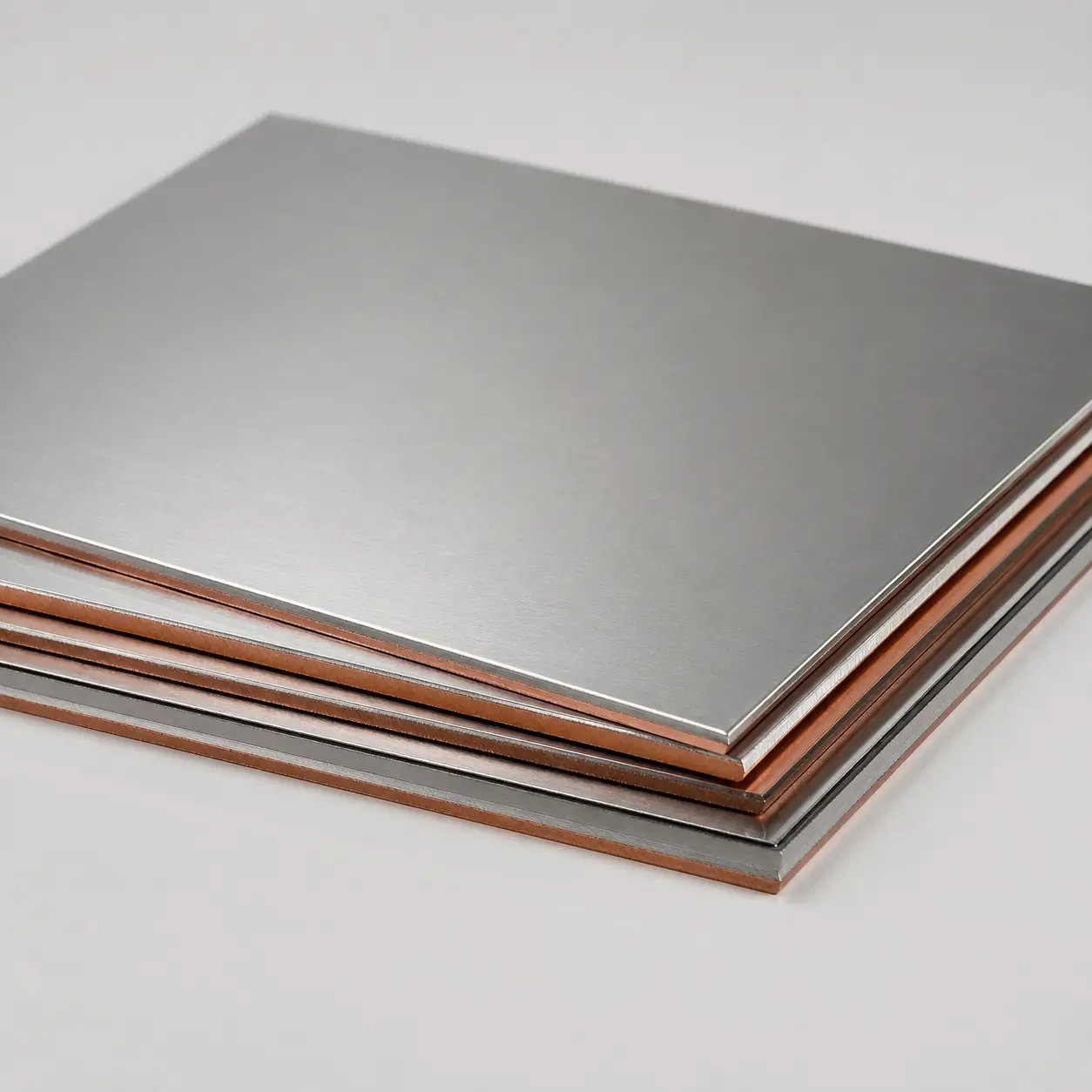
Titanium-Clad Copper Plates
5–50mm | Single/Double Clad
Best for rectifiers & tank bases
Strict flatness and dimensional control support structural stability and corrosion-proof electrical integration.
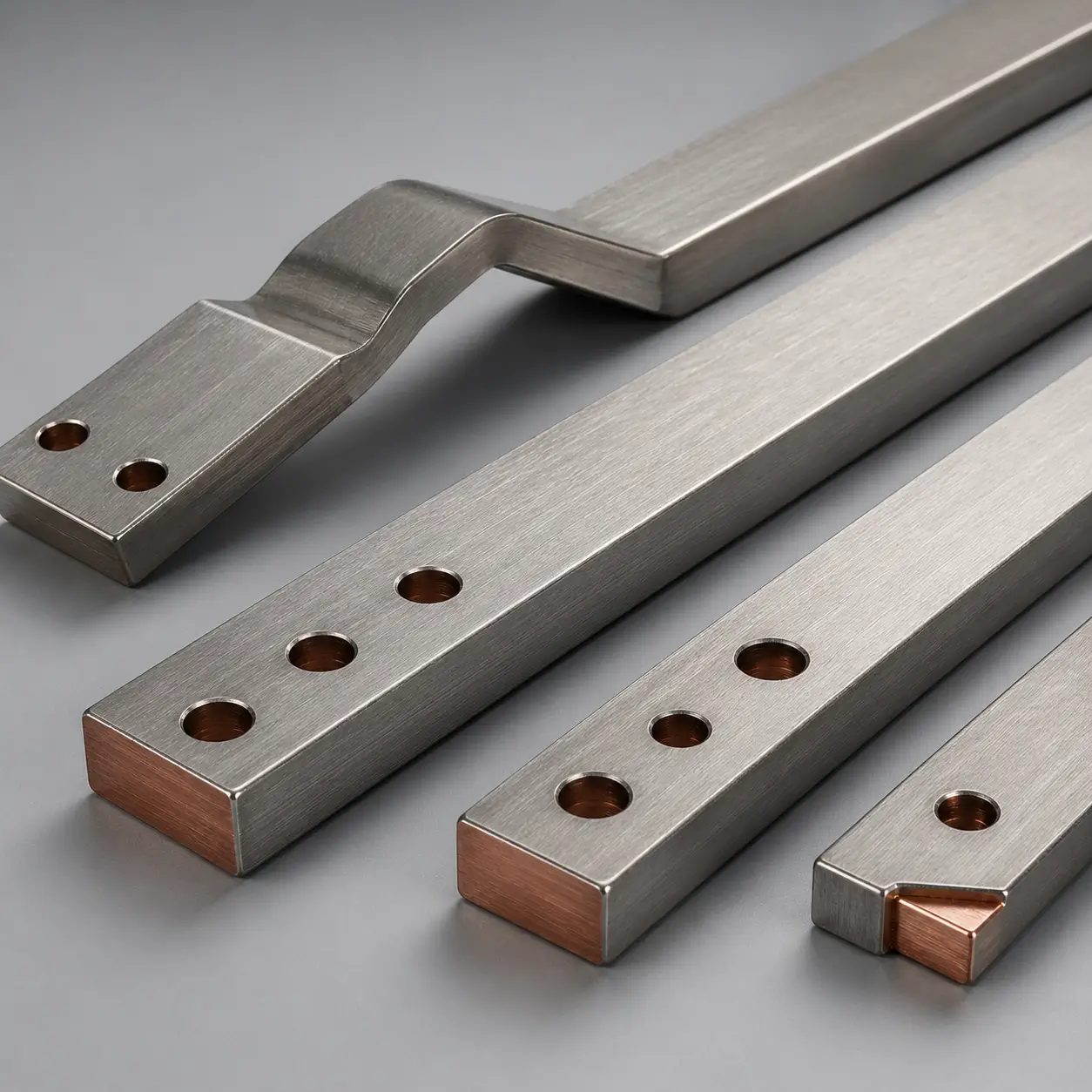
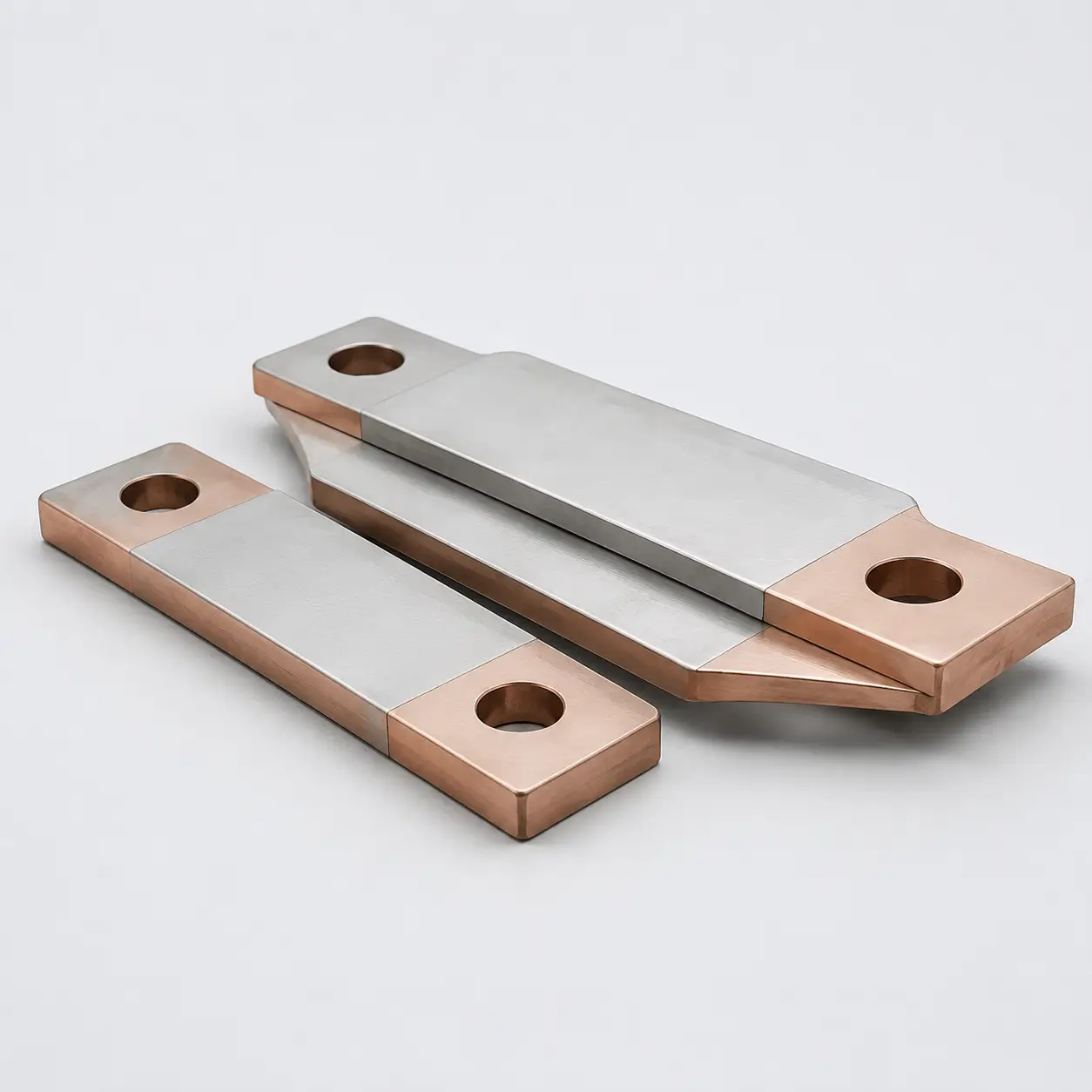
Titanium-Clad Copper Busbars
Up to 6m Lengths | ASTM B898
Best for severe-corrosion power dist.
Optimized Ti/Cu ratio reduces power loss while protecting the copper core from chemical attack.
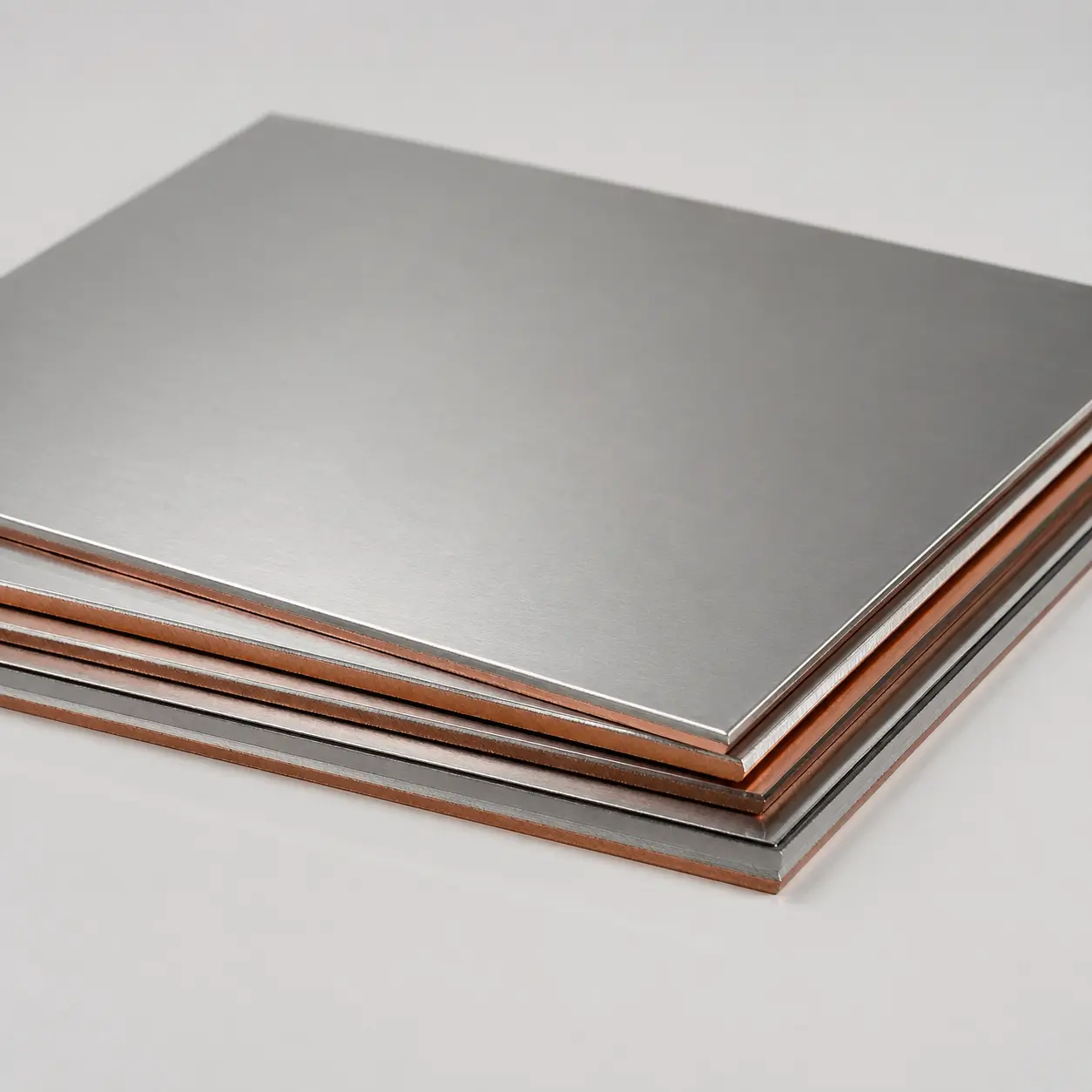
Titanium-Clad Copper Sheets
1–10mm | Mill / Brushed Finish
Best for cathode plates & linings
Precision slit-to-width sheet forms combine conductivity with a chemically inert contact surface.
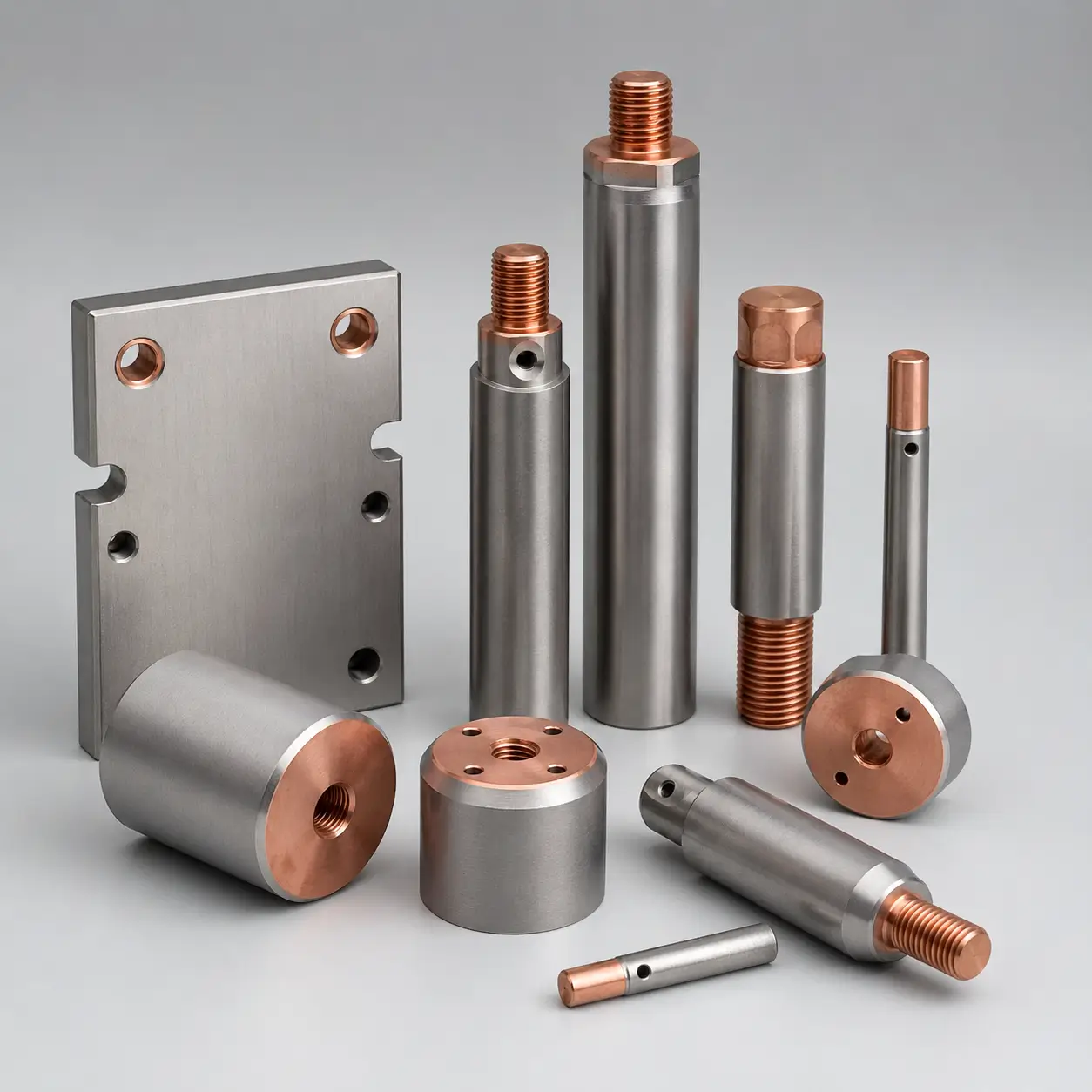
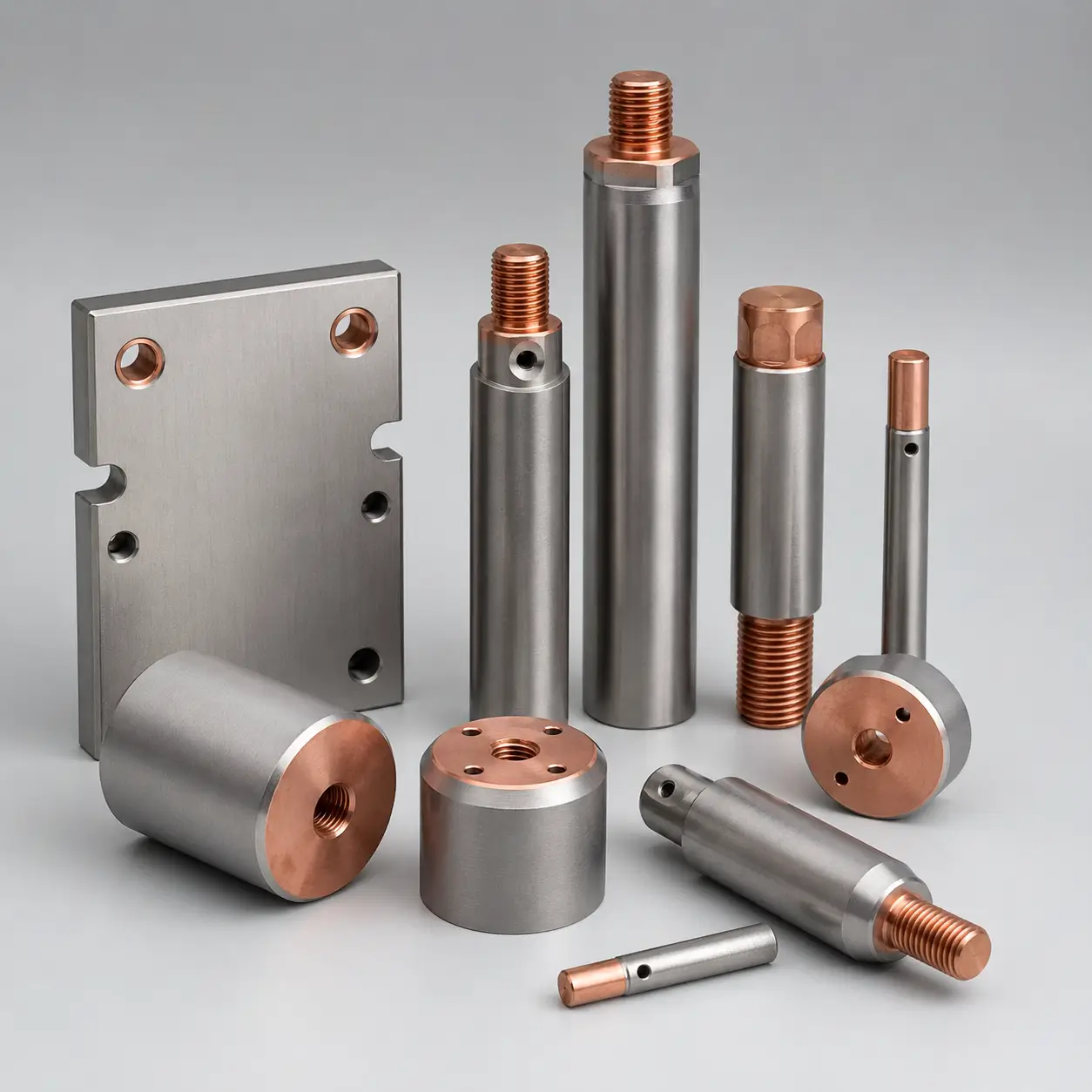
Titanium-Clad Copper Electrodes
Pre-Drilled / Threaded | Opt. MMO
Best for electrowinning & anodizing
Ready-to-install conductor-electrode components built for stable electrochemical performance.
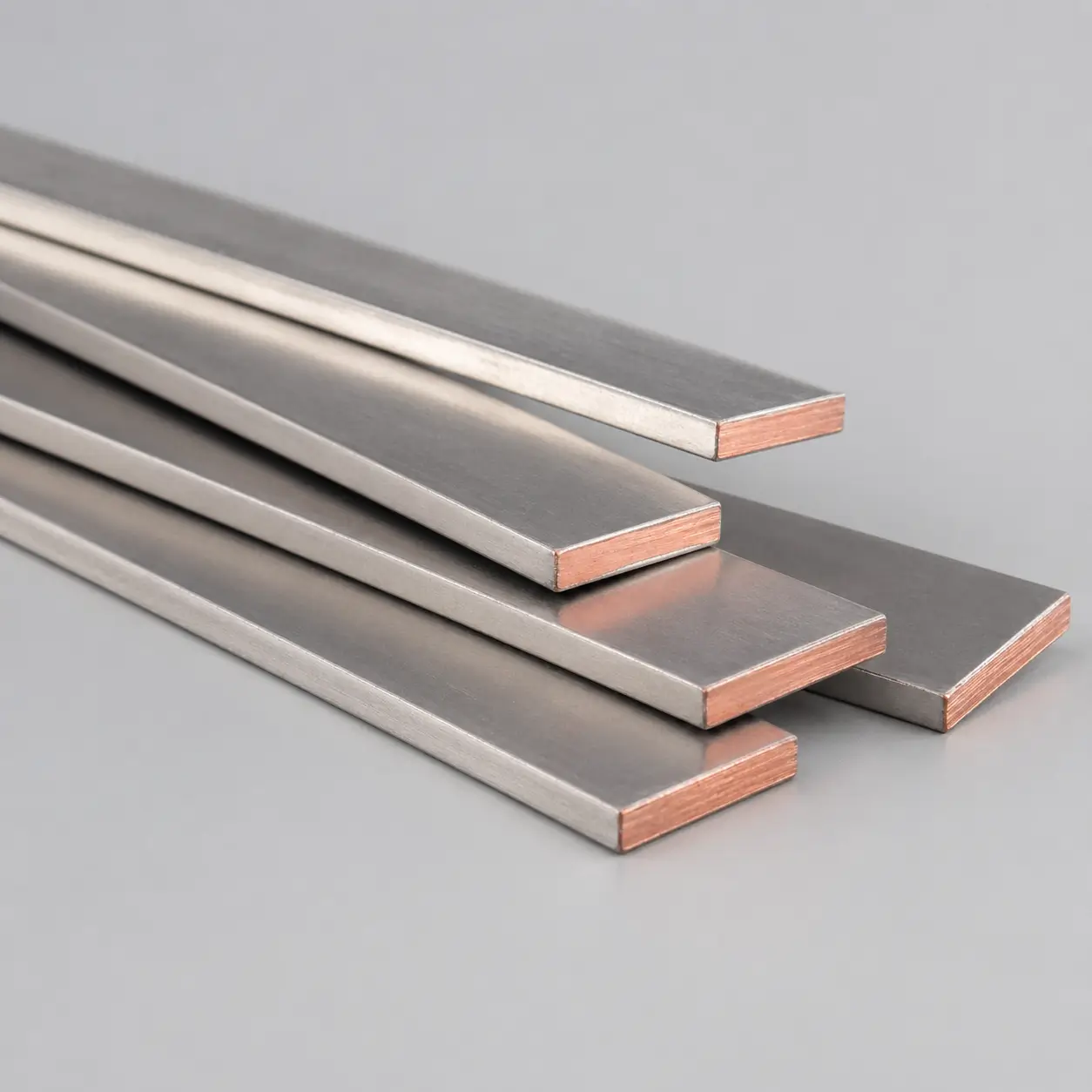
Titanium-Clad Copper Strips
10–300mm Width | Coiled/Straight
Best for battery tabs & connectors
Zero-burr edge conditioning and precise width control improve conductor safety and assembly quality.
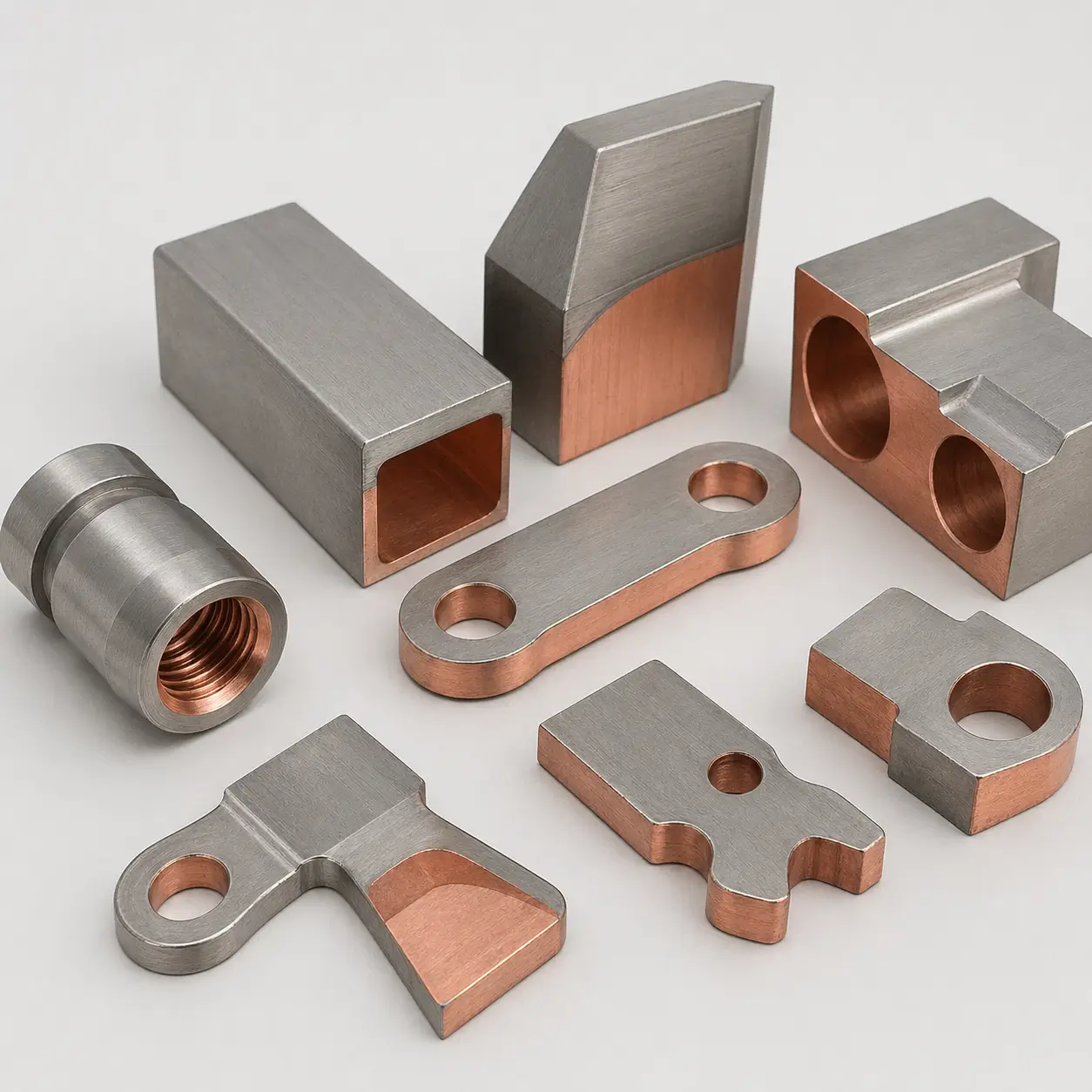
Custom Ti-Cu Fabrication
CNC Milling / Turning / Welding
Best for proprietary OEM systems
We fabricate bespoke elbows, flanges, blocks, contacts, and connection parts to your exact technical drawings.
How to Choose the Right Titanium-Clad Copper Component
Titanium-clad copper selection should be reviewed according to product form, copper core size, titanium cladding thickness, current carrying capacity, contact resistance, bonding quality, exposed copper protection, corrosion environment, machining requirement and documentation needs.
Confirm Product Form
Choose titanium-clad copper bar, rod, tube, plate, strip, busbar, hanger bar, connector, terminal or custom titanium-clad copper component according to current distribution, installation space and equipment design.
Define Copper Core & Cladding
Confirm copper core size, titanium cladding thickness, overall dimensions, cladding coverage, bonding quality, exposed copper protection and end structure according to conductivity and corrosion resistance requirements.
Review Current Load
Confirm current rating, current carrying capacity, contact area, contact resistance, connection method, bolting position, welding area, heat generation and voltage drop requirement before production review.
Match Corrosion Environment
Review electrolyte type, chloride exposure, acidic or alkaline condition, operating temperature, titanium grade requirement and exposed copper risk according to the actual electrochemical environment.
Confirm Machining Requirements
Review cutting, drilling, slotting, bending, CNC machining, threading, welding, end sealing, copper exposure protection and installation method according to drawings or assembly requirements.
Prepare Inspection & Docs
Confirm dimensional inspection, titanium cladding thickness check, bonding review, conductivity requirement, surface inspection, MTC, traceability records, packing list and export documents according to project requirements.
Selection Note
Final titanium-clad copper selection should be confirmed according to product form, copper core size, titanium cladding thickness, current carrying capacity, contact resistance, bonding quality, exposed copper protection, voltage drop requirement, electrochemical environment, machining scope, inspection level and documentation needs.
Need help reviewing your titanium-clad copper conductor design?
Typical Specifications
Titanium-clad copper components can be manufactured and reviewed according to drawing, current load, corrosion environment and assembly requirements.
| Item | Typical Specification |
|---|---|
|
Product Forms
|
Bar, rod, tube, strip, plate, busbar, hanger bar, connector or custom titanium-clad copper component |
|
Base Material
|
Copper core |
|
Cladding Material
|
Titanium |
|
Titanium Grades
|
Grade 1 / Grade 2 commonly reviewed |
|
Copper Options
|
According to project requirement |
|
Dimensions
|
According to drawing or specification |
|
Cladding Thickness
|
According to design requirement |
|
Connection Type
|
Bolted, welded, drilled, threaded or custom |
|
Processing
|
Cutting, drilling, machining, bending, welding review according to project requirement |
|
Inspection
|
Dimensional check, cladding review, surface inspection, bonding review, traceability |
|
Documents
|
MTC, inspection records, packing list, export documents |
Note: Final specifications should be confirmed according to actual application, installation design and project requirements.
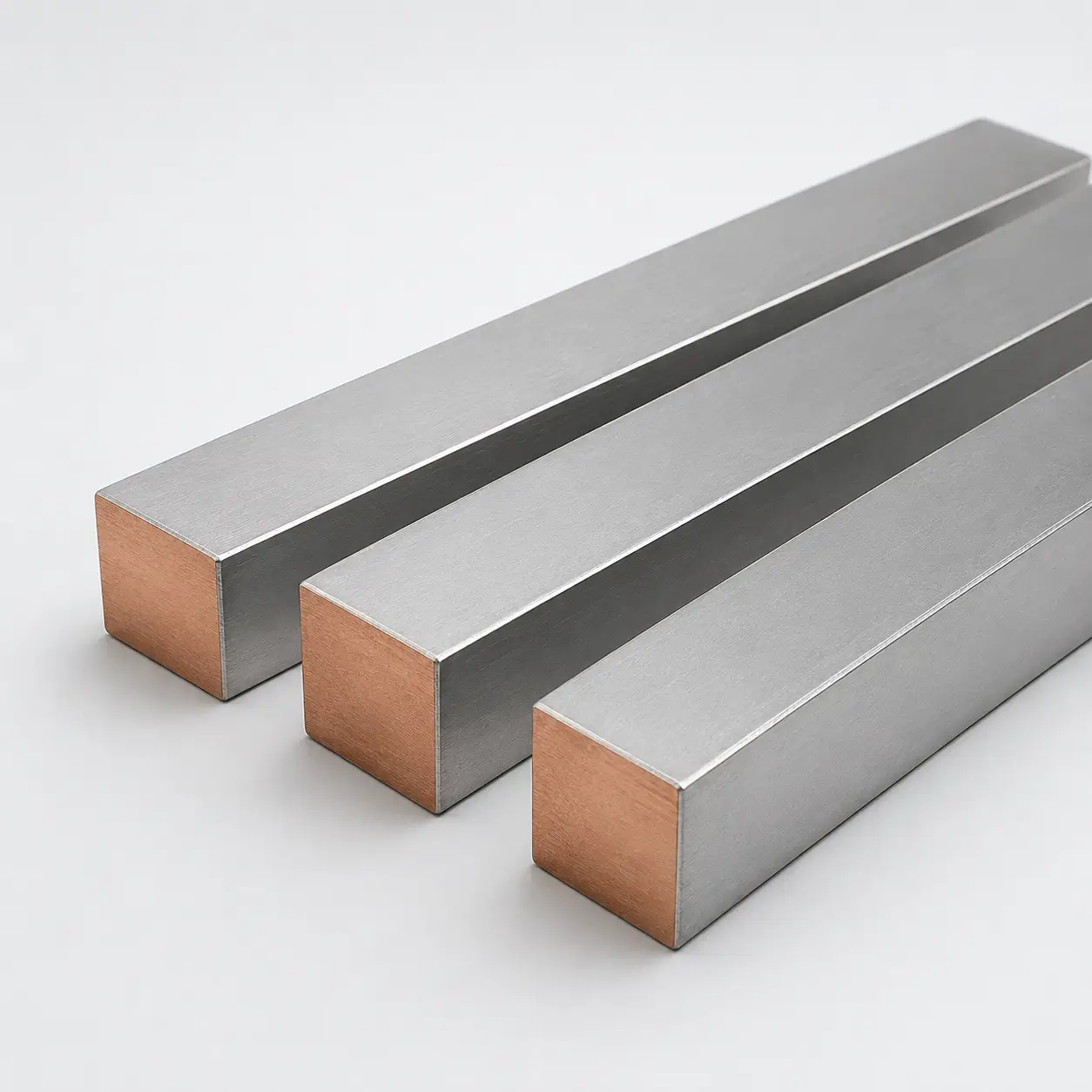
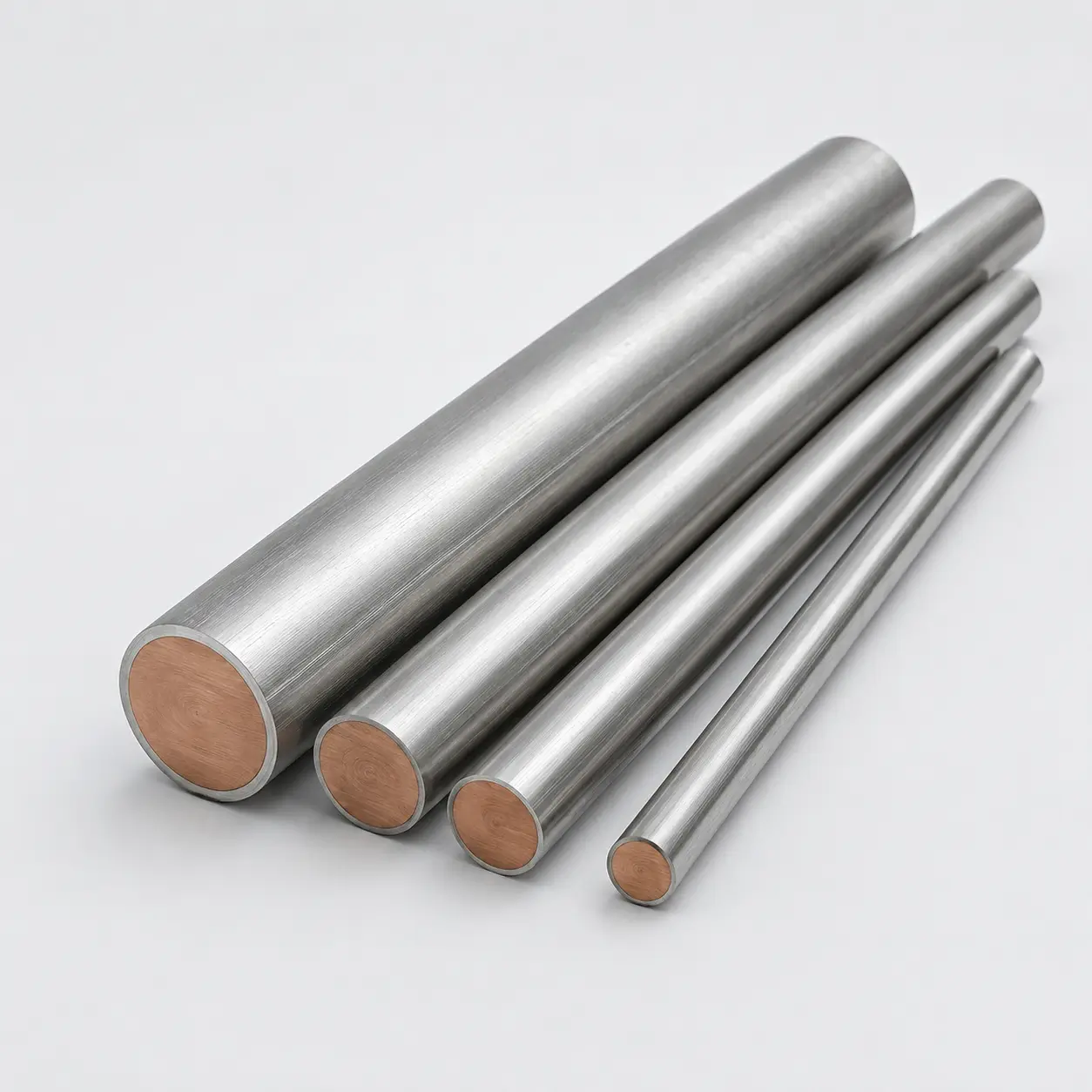
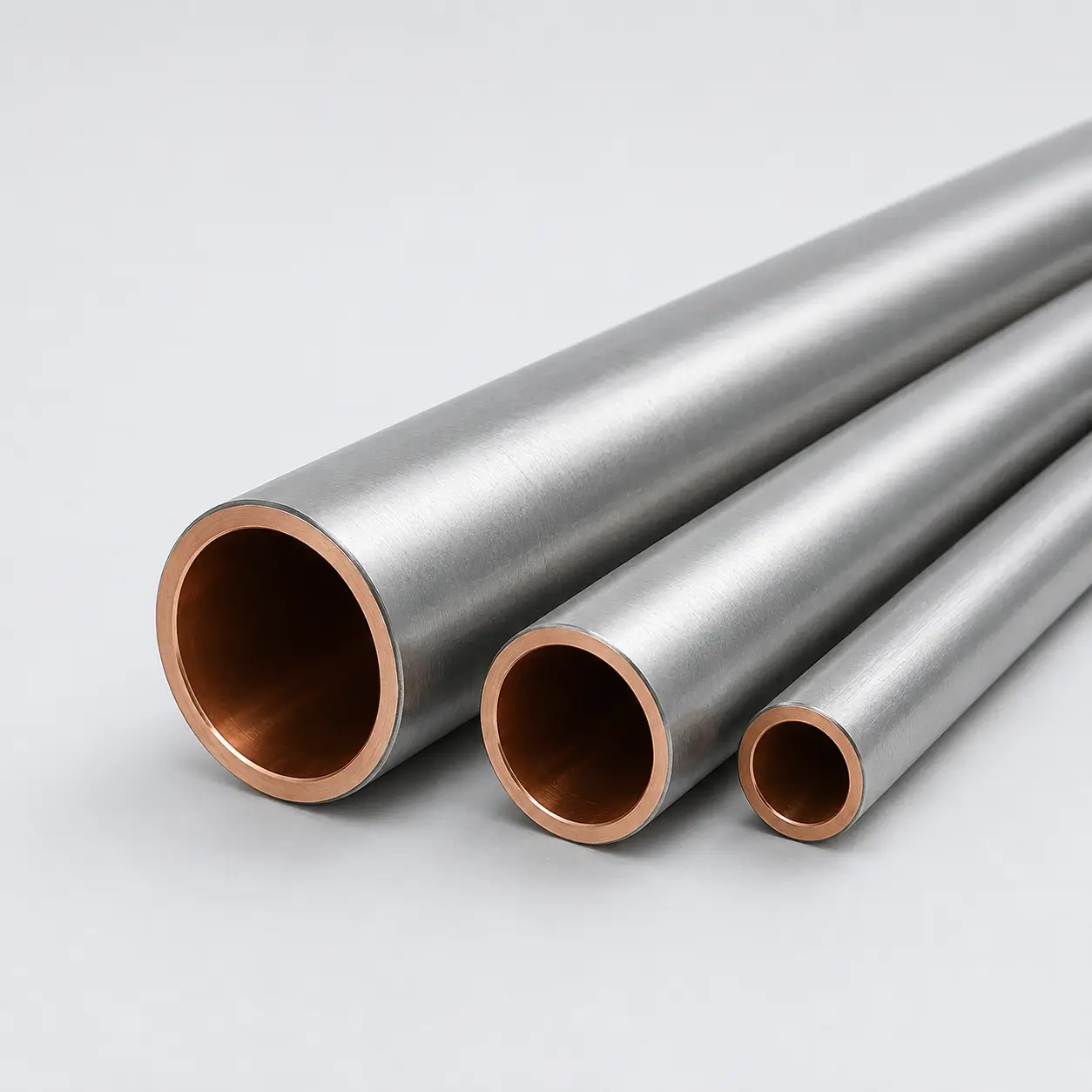
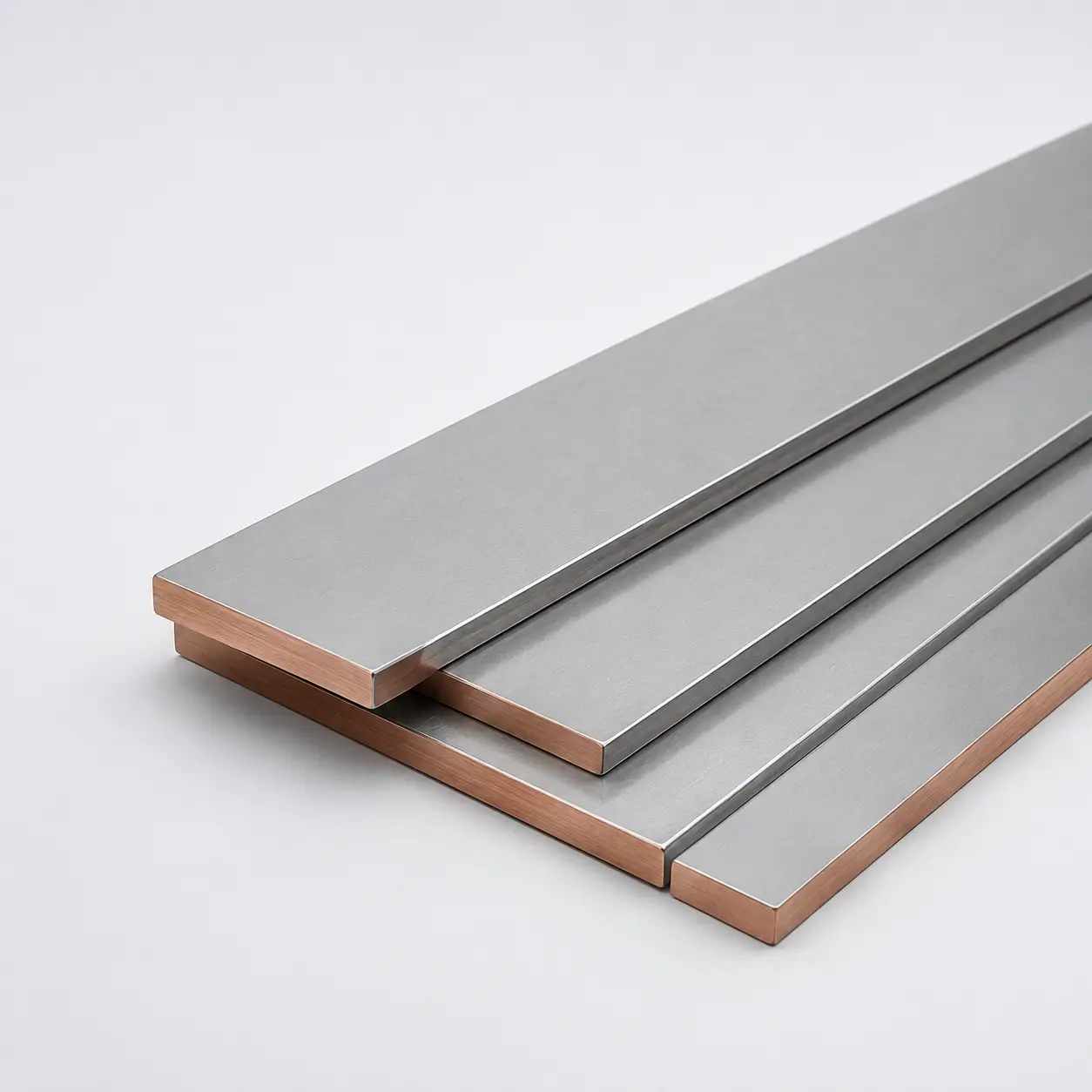
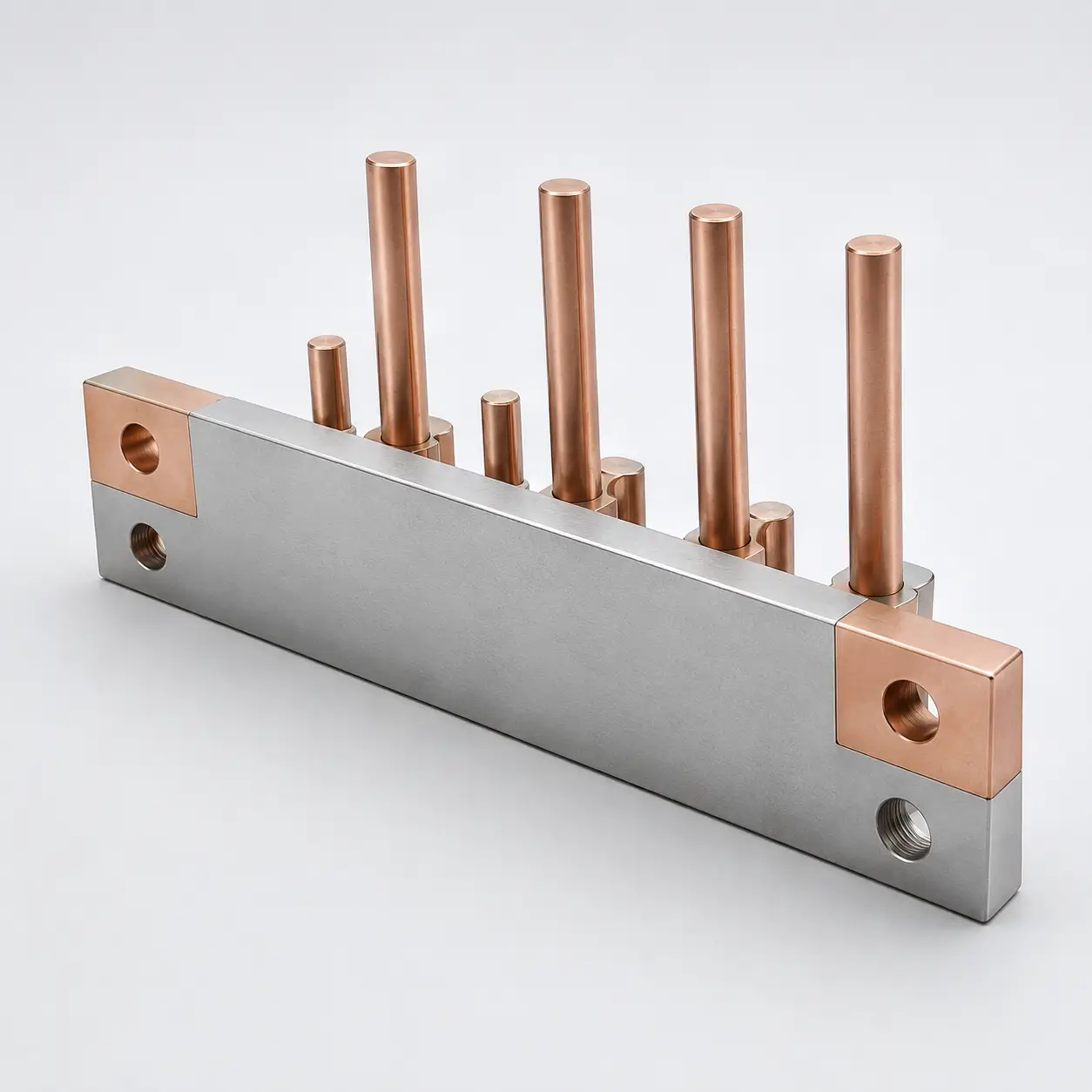
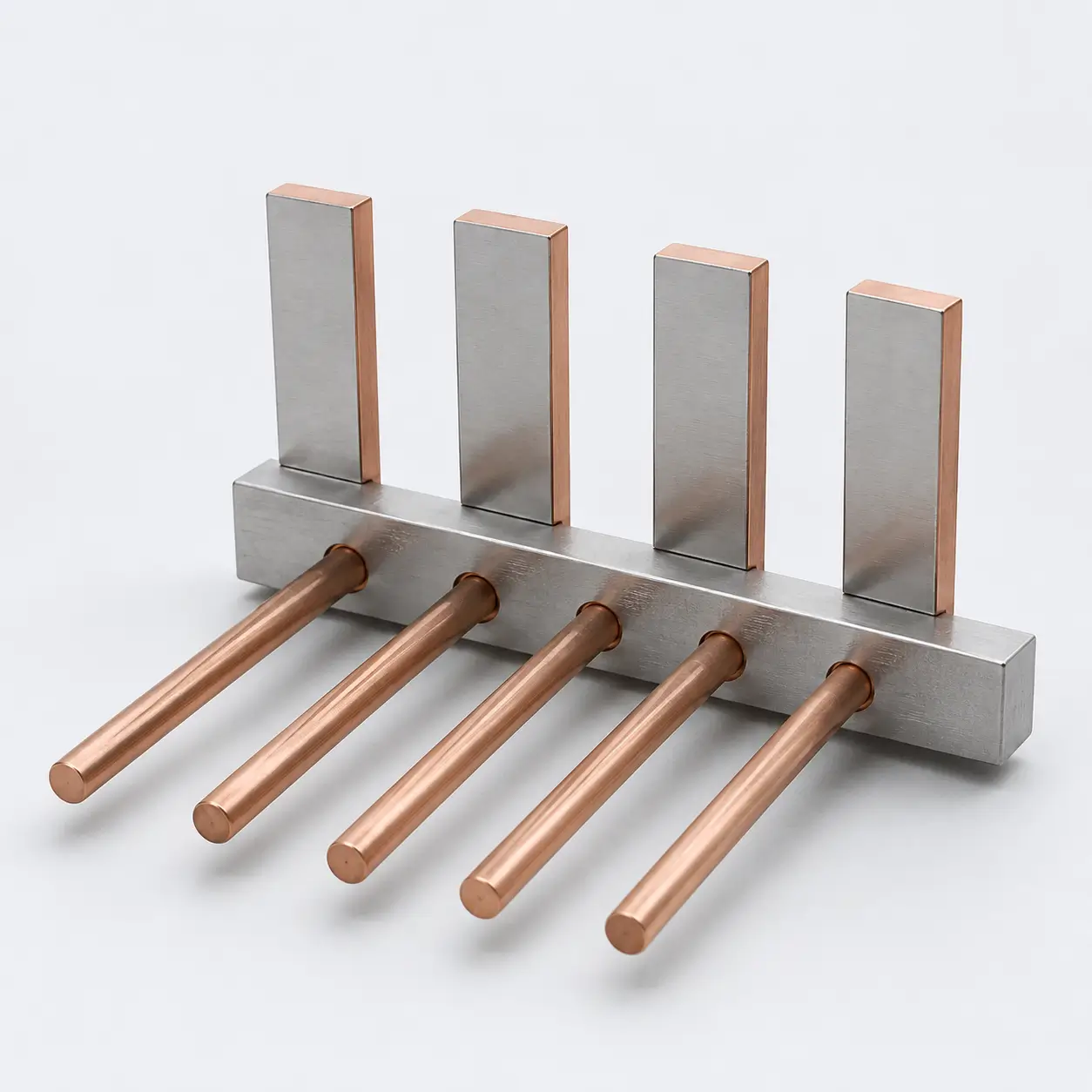
Custom Specifications Are Welcome
All specifications can be reviewed and manufactured according to your drawings, current rating, connection design and electrochemical environment.
Custom Ti-Cu Composite Fabrication
Engineered to Your Exact Electrochemical Specifications
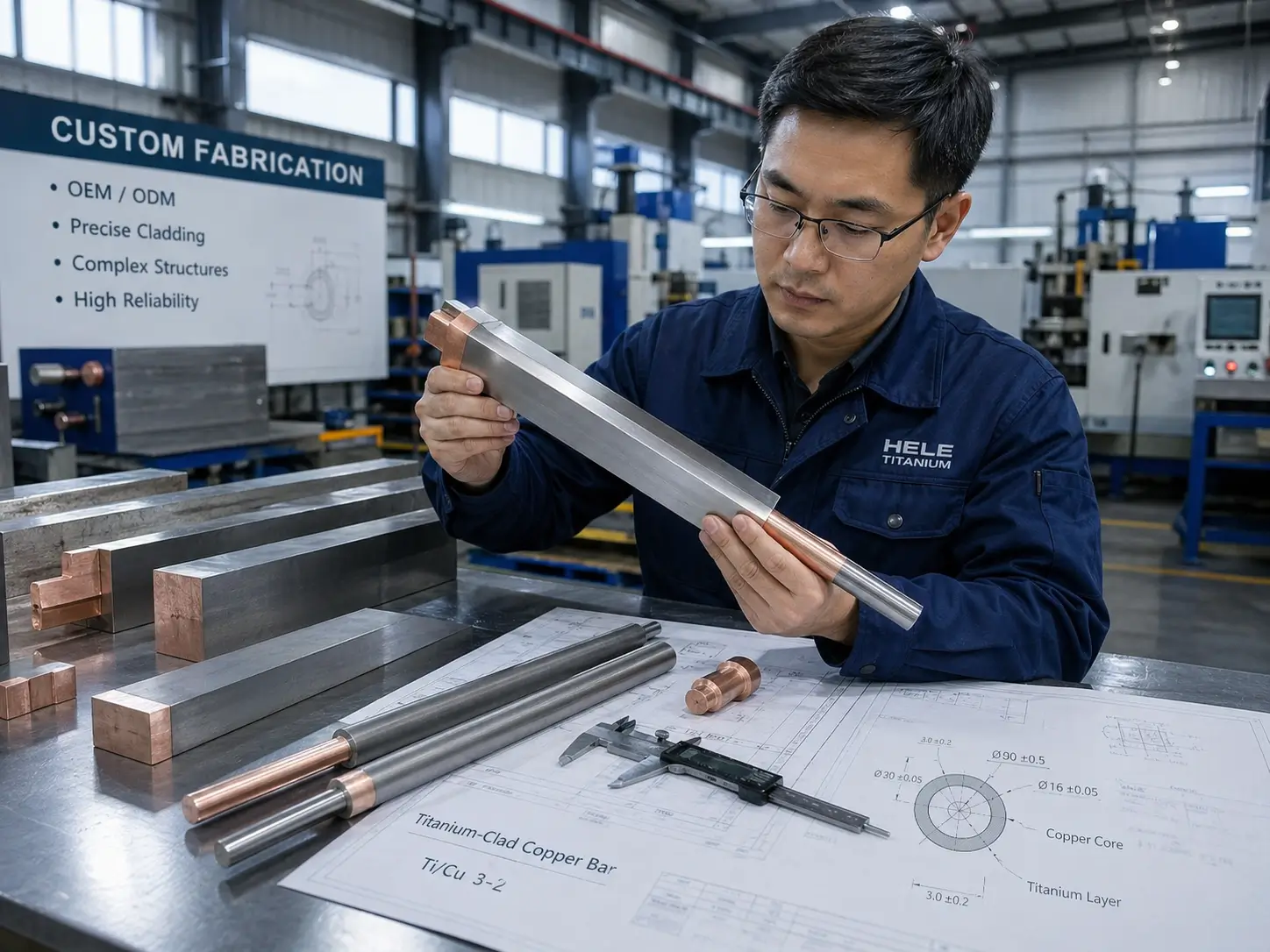
Standard off-the-shelf conductors often fail to match the spatial constraints, current-density limits, or mounting logic of proprietary electrochemical systems. We work directly with OEMs and plant engineers to produce bespoke titanium-clad copper profiles designed for long-term electrochemical reliability.
Metallurgical Calibration
- • specify exact Ti/Cu ratio
- • C11000 or OFHC copper core options
- • Grade 1 / 2 / 7 titanium cladding
Advanced Bonding Protocols
- • explosive or hot-roll bonding
- • controlled bonding for thermal load
- • anti-delamination & low resistance
Precision CNC & Assembly
- • drilling, slotting, threading, milling
- • ready-to-install fabricated parts
- • seamless integration, core protected
Surface & Contact Tuning
- • mill, brushed, or polished finish
- • MMO / platinum coating support
- • contact tuning for lower voltage drop
Maximum Conductivity. Zero Corrosion. OEM-Ready Fabrication.
Stringent Quality Control: Engineered for Zero-Defect Conductivity
In high-amperage electrochemical environments, interface delamination or compromised titanium shielding leads to catastrophic copper-core corrosion, unstable current flow, and severe voltage loss. We apply rigorous NDT and metallurgical QA protocols to ensure a continuous, void-free bond and stable conductor performance before shipment.
The Ti-Cu QA & Metrology Workflow
Interfacial Bond Integrity
Action: 100% Ultrasonic Testing (UT) per bond-quality requirements.
Goal: detect voids, unbonded areas, and interface delamination.
✓ Confirms a continuous metallurgical bond throughout the conductor profile.
Material Verification
Action: PMI / spectrometer verification of copper core and titanium cladding.
Goal: confirm OFHC / C11000 core purity and titanium grade identity.
✓ Prevents material mix-up and supports full heat-number traceability.
Cladding Shield Uniformity
Action: eddy-current or sectional thickness verification.
Goal: confirm exact titanium wall thickness from 0.5mm to 3.0mm.
✓ Ensures reliable long-term chemical immunity without exposed copper risk.
Electrical Performance
Action: micro-ohmmeter testing and continuity verification.
Goal: guarantee maximum current-carrying capacity and low interfacial resistance.
✓ Prevents hidden voltage drop in high-load systems.
Dimensional Metrology
Action: calipers, micrometers, CMM, and profile verification.
Goal: maintain flatness, width, diameter, and custom machining accuracy.
✓ Ensures seamless OEM installation and network integration.
Comprehensive QA Documentation Packet
- ✔ EN 10204 3.1 Material Test Certificate
- ✔ UT / NDT bond-integrity reports
- ✔ Certificate of Conformity
- ✔ Dimensional and cladding-thickness reports
- ✔ ISO 9001:2015 & export packing verification support
Industry-Specific Ti-Cu Solutions
Titanium-clad copper is the definitive conductor solution for high-current systems operating in aggressive media. We engineer bespoke Ti-Cu components to meet the exact electrical and chemical thresholds of your application.
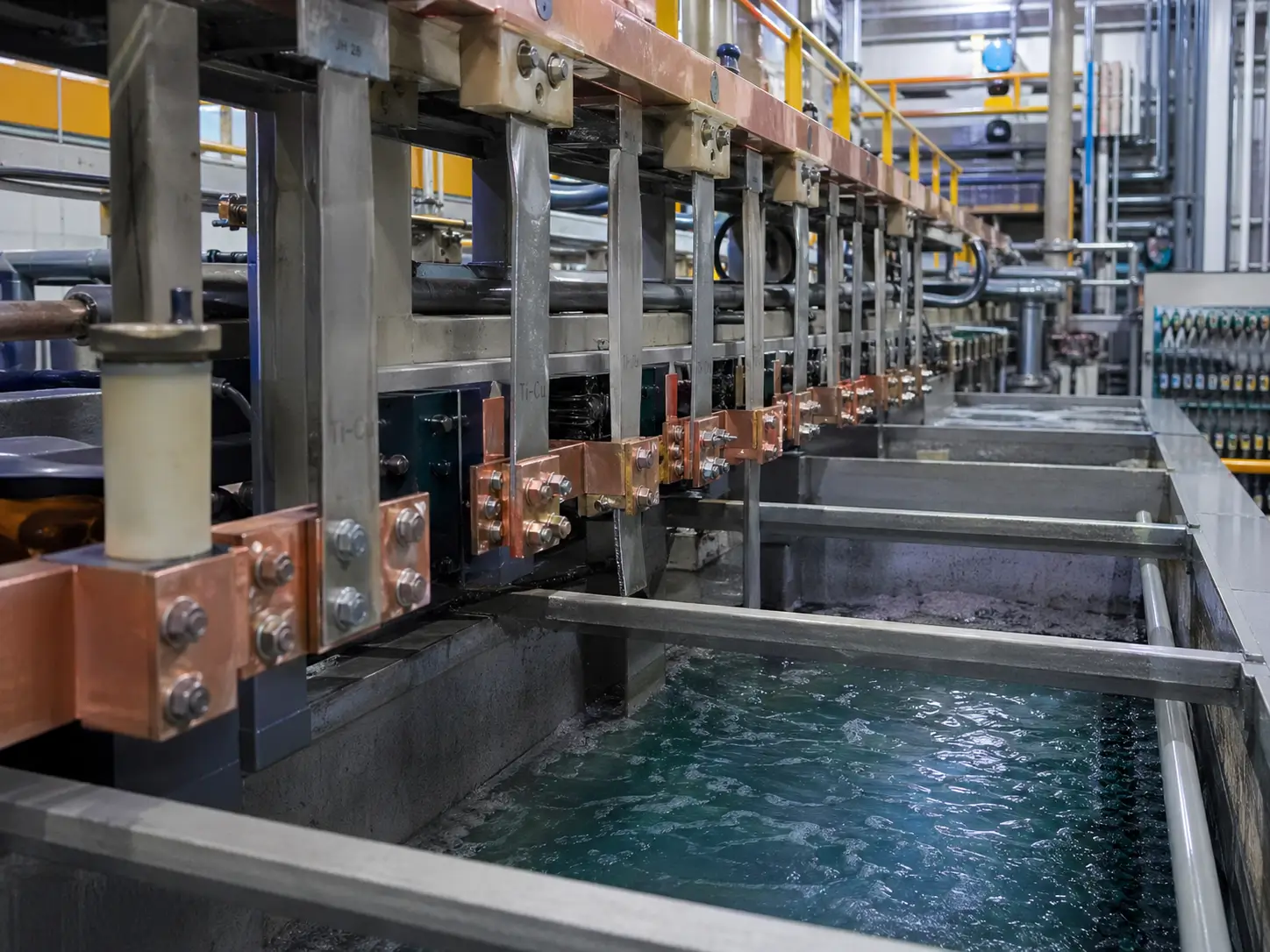
Electroplating & Surface Finishing
Profile Focus: Busbars & Anode Rods
Challenge: Acidic plating tanks destroy conventional copper conductors and increase power loss.
Solution: Metallurgically bonded Ti-Cu maintains stable current distribution while shielding the copper core from corrosion.
Service Condition: Acidic tanks, plating hangers
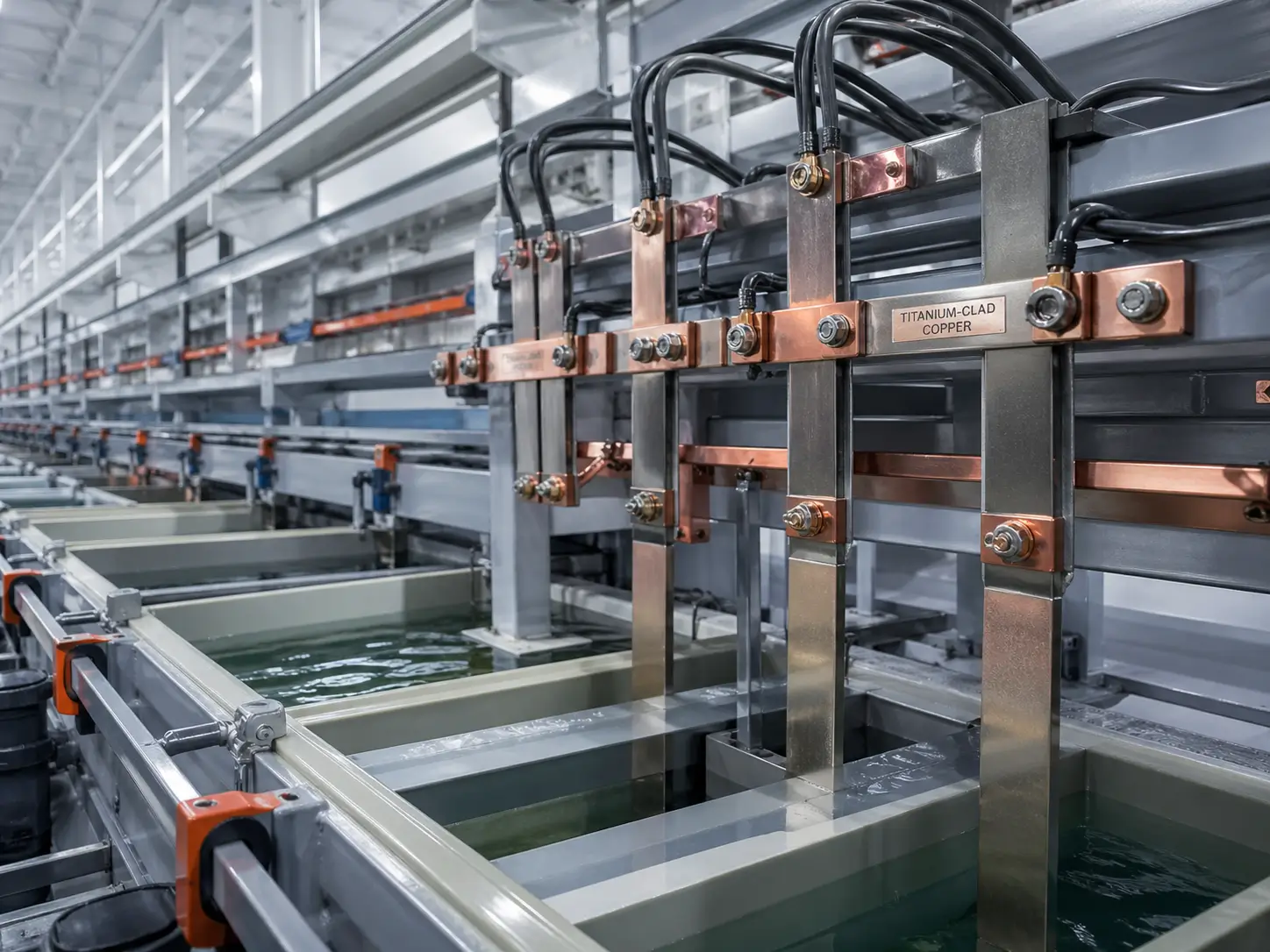
Power Distribution & Switchgear
Profile Focus: Busbars w/ Hole Patterns
Challenge: Coastal and corrosive environments rapidly oxidize exposed copper systems.
Solution: Ti-Cu busbars deliver copper-grade conductivity with titanium-level oxidation and corrosion resistance.
Service Condition: Coastal substations, corrosive electrical rooms
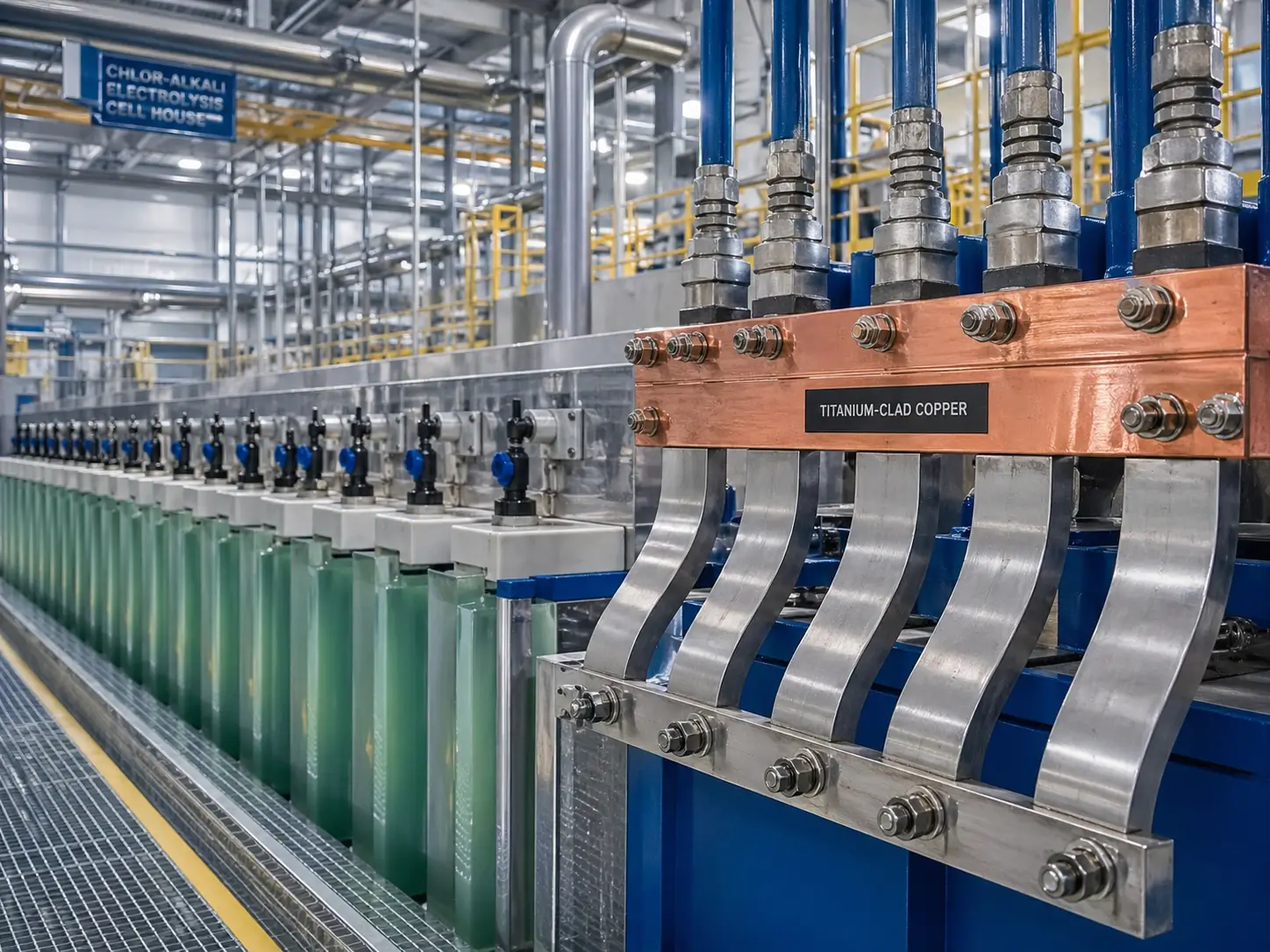
Chlor-Alkali & Chemical Processing
Profile Focus: Plates, Rods & Conductors
Challenge: Wet chlorine, hypochlorites, and severe electrolytes attack ordinary metallic conductors.
Solution: Custom cladding thickness and bond integrity protect conductor performance in aggressive electrochemical duty.
Service Condition: Electrolyzer frames, acid circulation
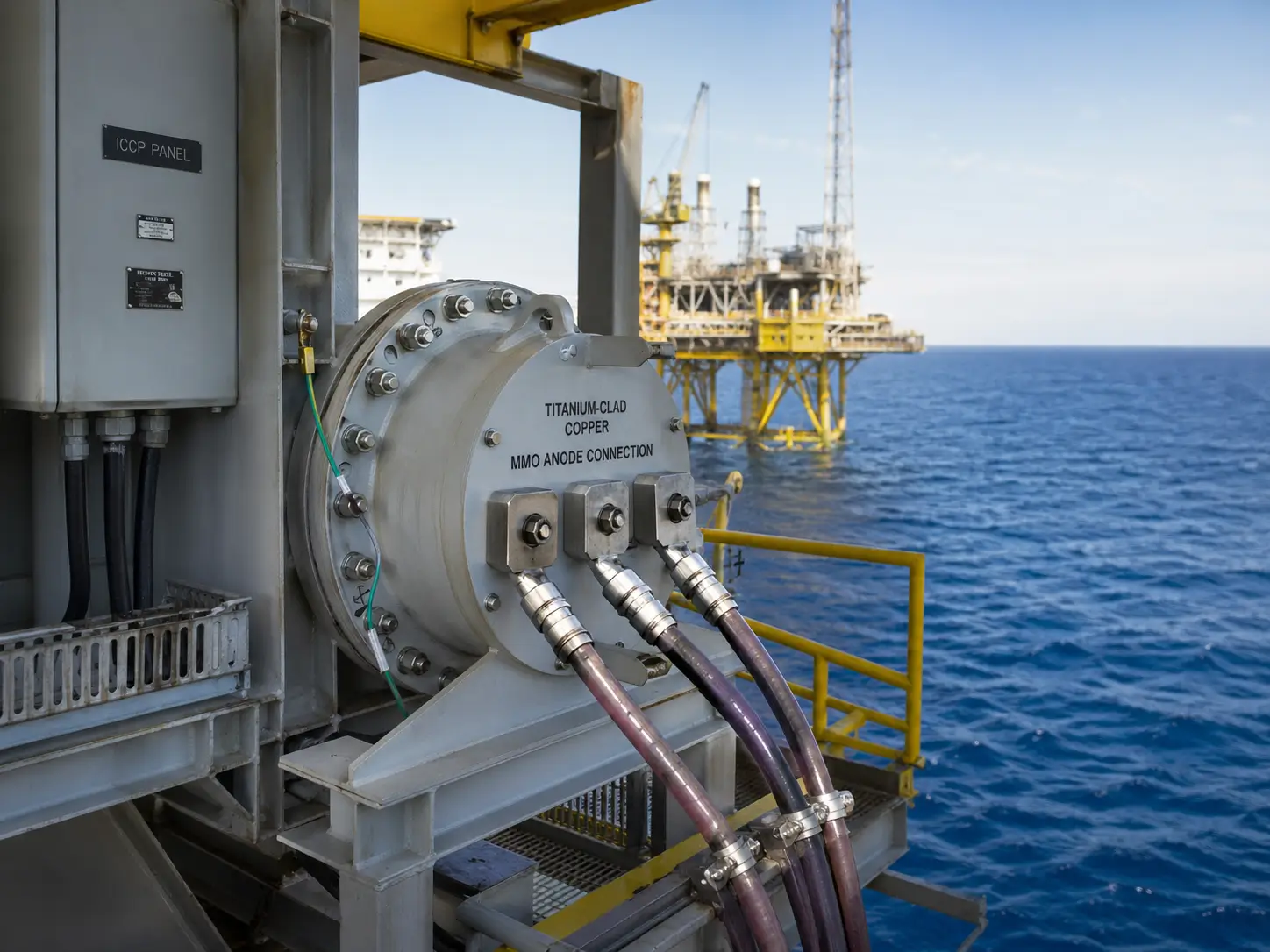
Marine & Cathodic Protection
Profile Focus: Grounding Grids & Conductors
Challenge: Permanent saltwater exposure causes fast conductor degradation and unstable grounding performance.
Solution: Ti-Cu composites preserve electrical continuity while preventing seawater-driven corrosion failure.
Service Condition: Shipboard electrical, marine grounding
Optimize current transfer and service life with Ti-Cu conductors engineered for corrosive industrial reality.
Why Buyers Choose Hele Titanium for Titanium-Clad Copper Components
Titanium-clad copper projects require more than conductive material supply. Buyers need the right copper core, suitable titanium cladding, reliable current path, protected connection design, accurate machining, inspection records and export-ready documentation. Hele Titanium supports titanium-clad copper components from drawing review to fabrication, inspection and international delivery according to project requirements.
Titanium and Copper Material Knowledge
We help review copper core requirements, titanium cladding material, titanium grade, corrosion environment, current carrying capacity and application conditions to support proper material selection.
Cladding Structure Review
Titanium cladding thickness, cladding coverage, exposed copper area, end structure and bonding quality can be reviewed according to drawings, current load, corrosion medium and installation requirements.
Current Path and Connection Design Support
Contact surface, bolting area, welding area, current path, contact resistance risk, voltage drop requirement and connection reliability can be reviewed when required by project scope.
Custom Machining and Fabrication
Cutting, drilling, slotting, threading, bending, CNC machining, welding review, end sealing and custom conductive component fabrication can be supported according to drawings or specifications.
Inspection, Traceability and Documentation
Dimensional inspection, cladding thickness review, surface inspection, bonding review, MTC, heat number traceability and inspection records can be prepared according to order requirements.
Export Packing and Project Delivery Support
Product marking, labels, protective packing, wooden case packing, packing list and export documents can be arranged to support international delivery and project receiving.
Buyer Support Note: Final supply scope should be confirmed according to product form, copper core size, titanium cladding thickness, current carrying capacity, contact design, exposed copper protection, machining requirements, inspection level, packing method and delivery schedule.
Work with a titanium-clad copper supplier focused on material structure, current connection reliability, custom fabrication and traceable project delivery.
Frequently Asked Questions
Find quick answers about titanium-clad copper product forms, copper core design, titanium cladding thickness, exposed copper protection, custom fabrication, inspection documents and international delivery.
Technical & Design Questions
1. What is titanium-clad copper used for?
2. Why use titanium-clad copper instead of pure copper?
3. What product forms can Hele Titanium supply?
4. How should titanium cladding thickness be selected?
5. How do you prevent copper exposure in corrosive electrolyte?
6. Can titanium-clad copper parts be drilled, machined or welded?
7. What information is required to design a custom titanium-clad copper component?
Commercial & Production Questions
1. What affects the price of titanium-clad copper components?
2. Can you manufacture according to drawings?
3. What documents can be supplied with shipment?
4. Can you support prototype and batch production?
5. What is the typical lead time for custom titanium-clad copper parts?
6. How are titanium-clad copper components packed for export?
7. Can you ship internationally?
Inside Our Manufacturing & Quality System
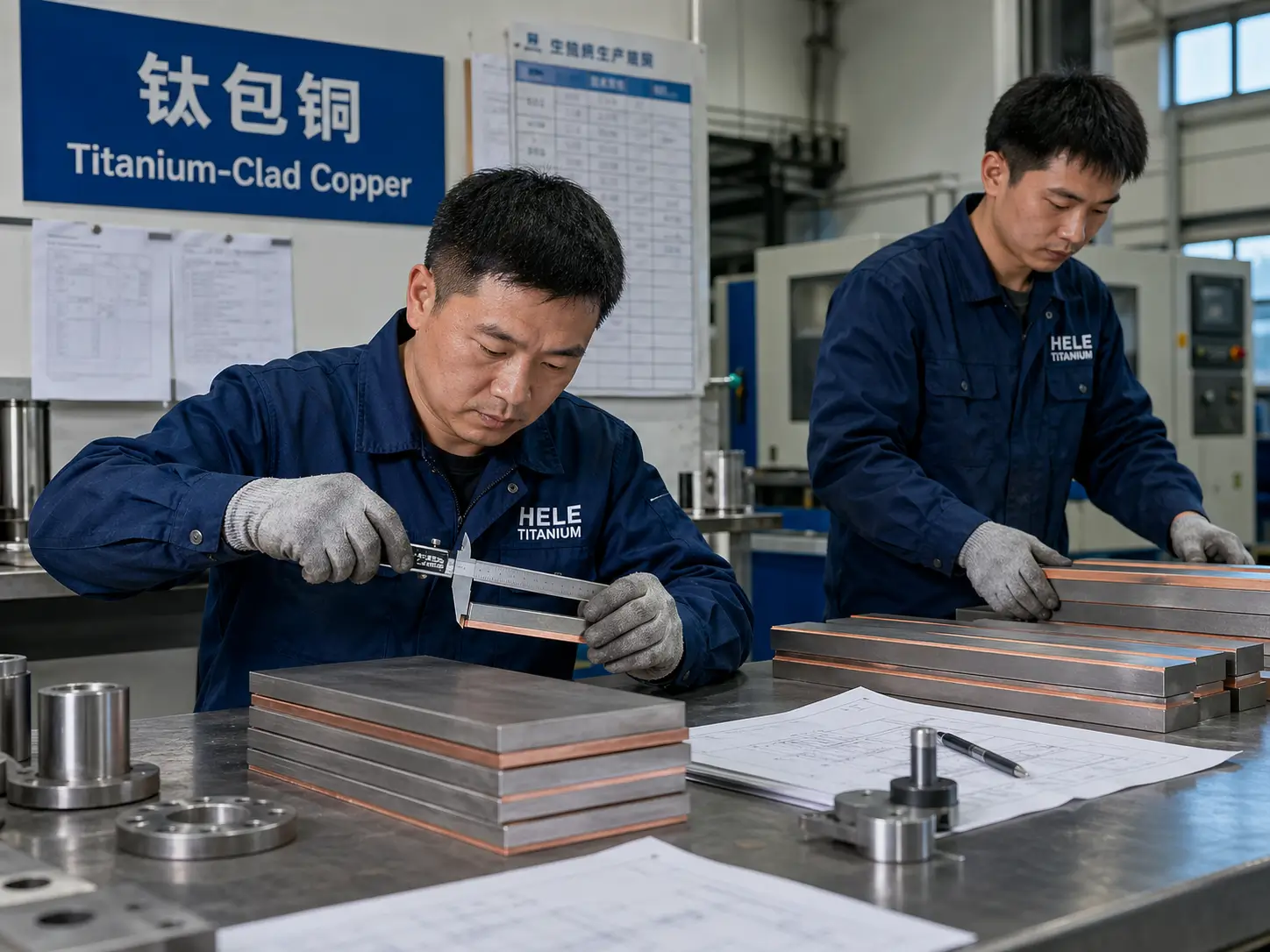
See how we produce, inspect, and document titanium products as a direct manufacturing partner.
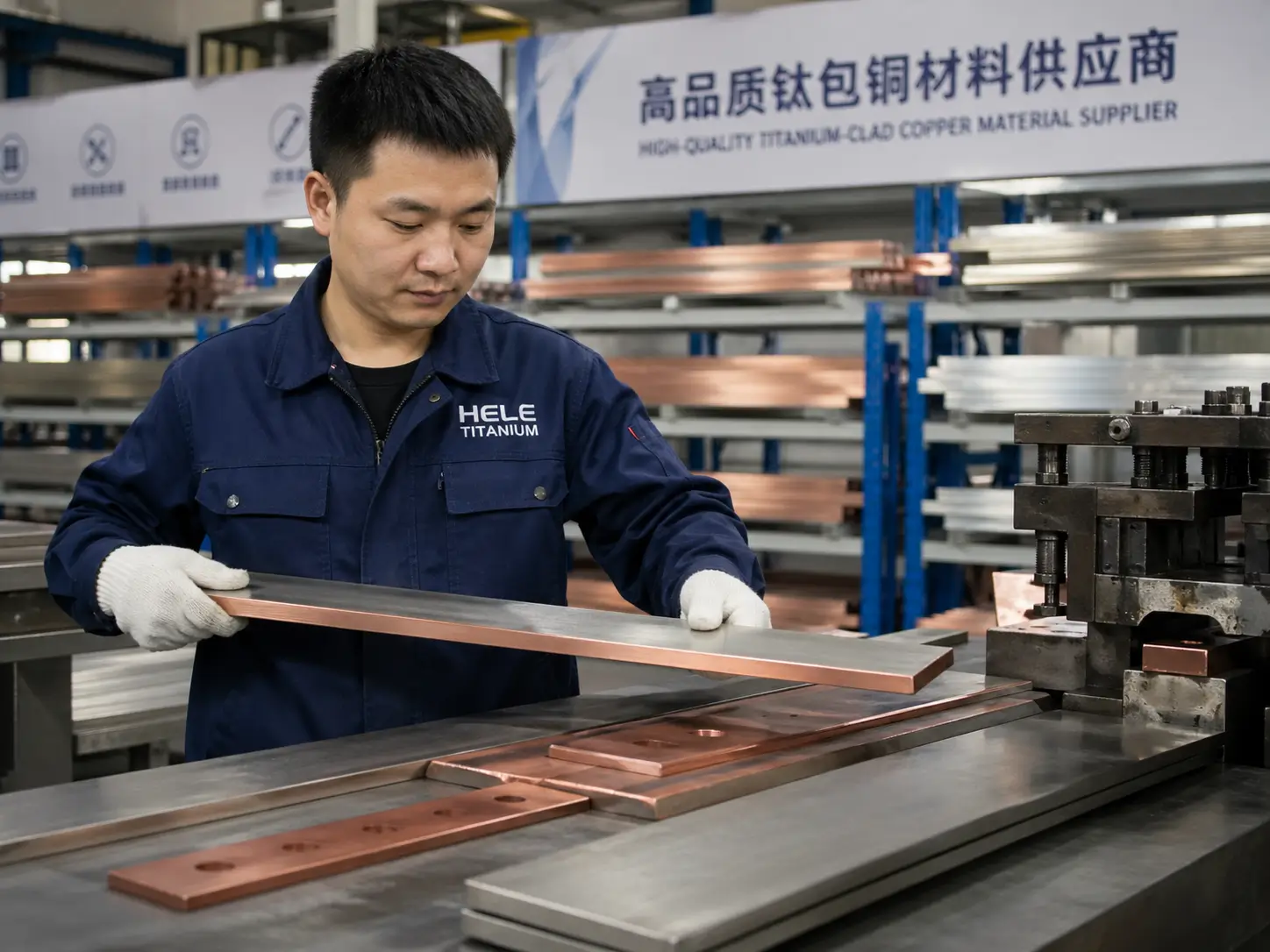
See how titanium-clad copper moves from copper-core preparation through bonding, profile finishing, machining, and final release.
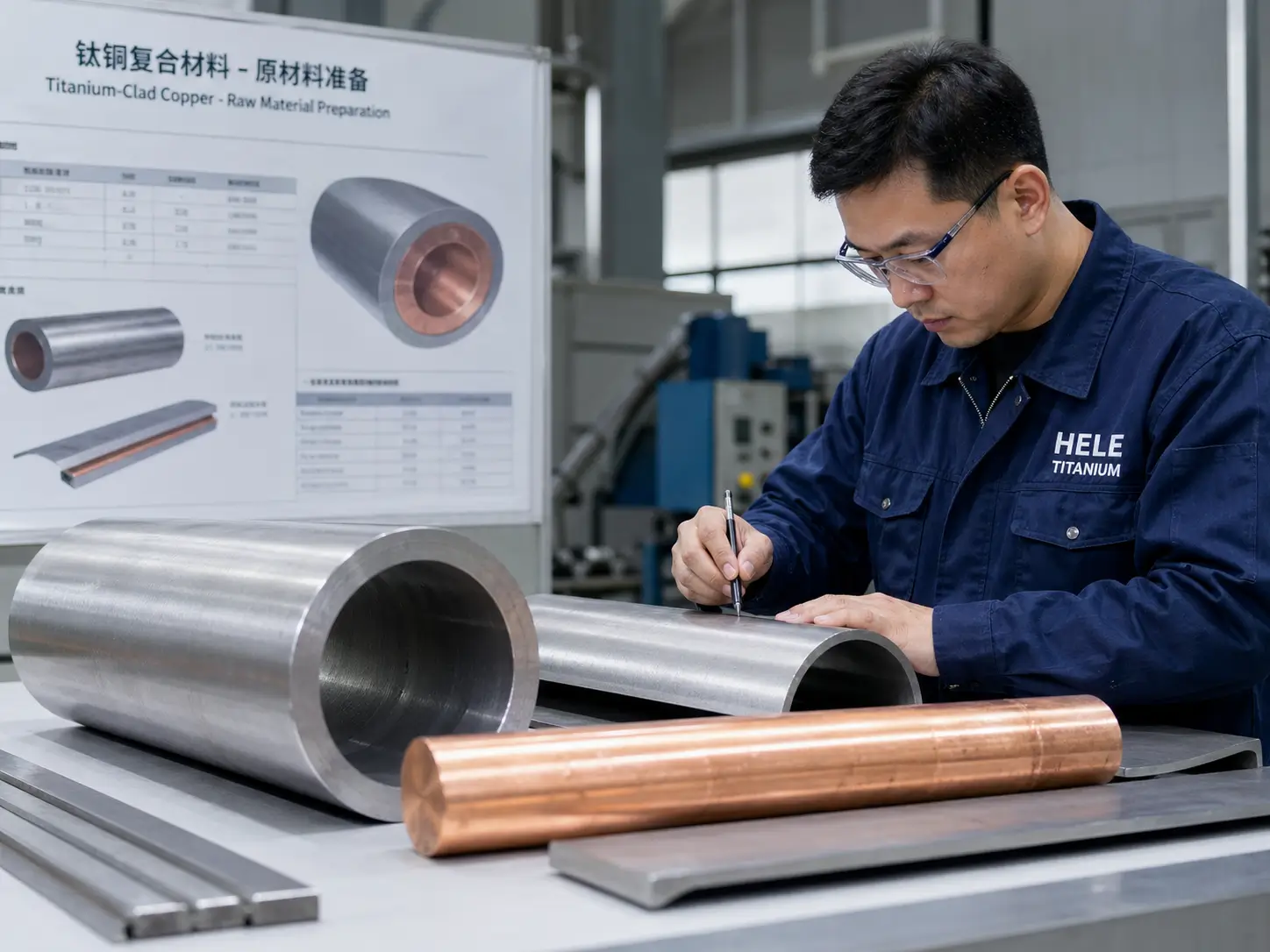
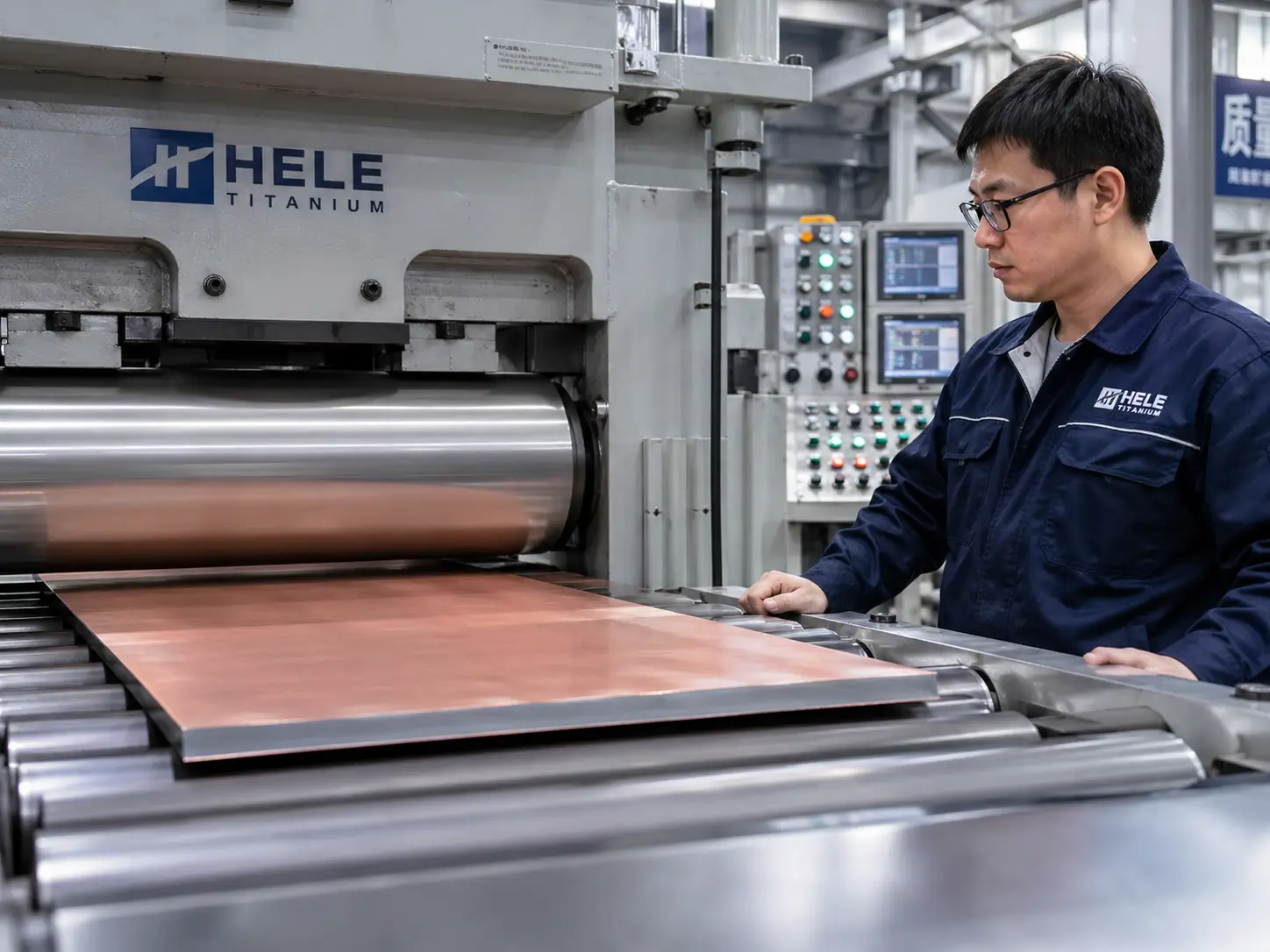
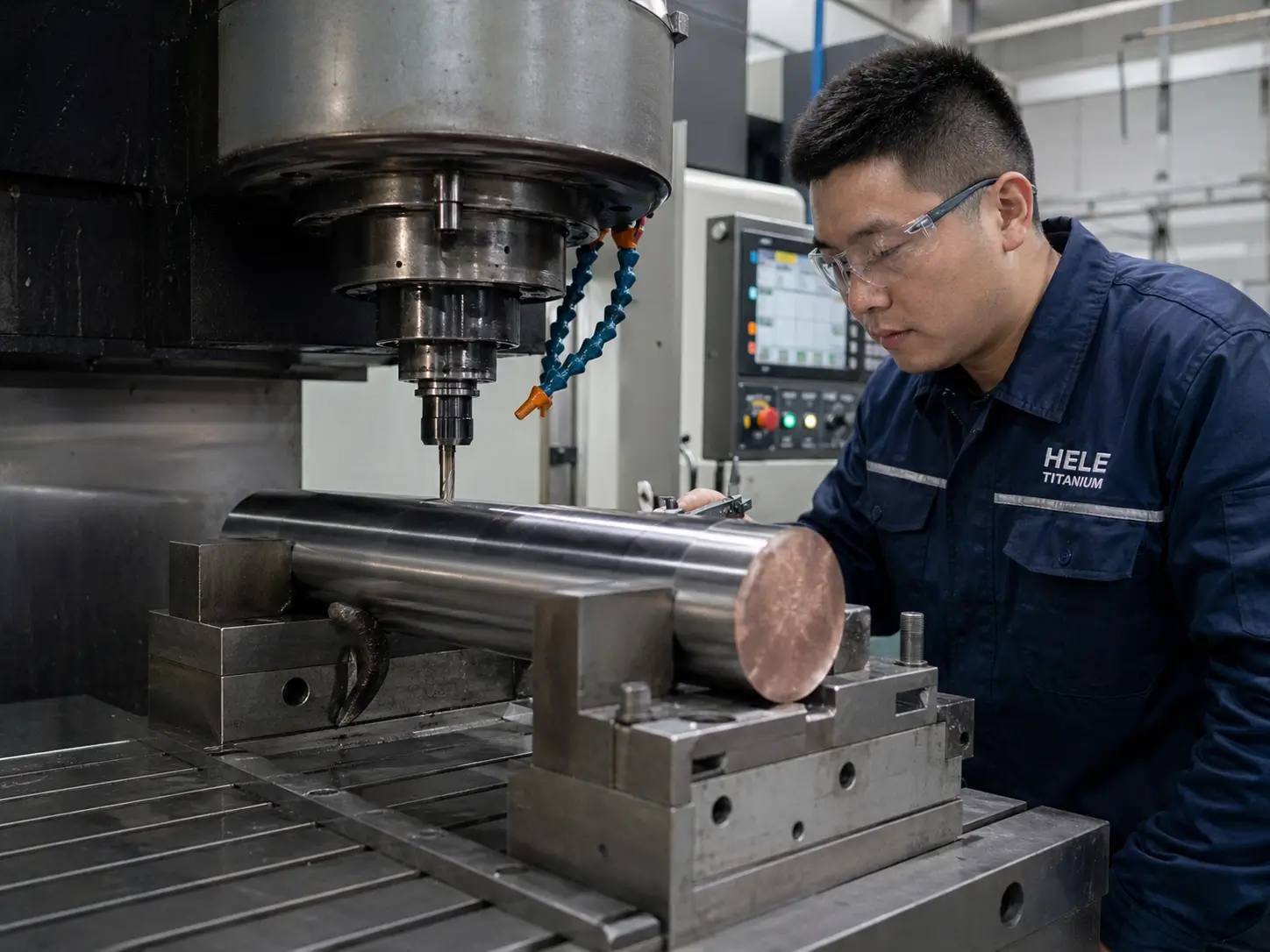
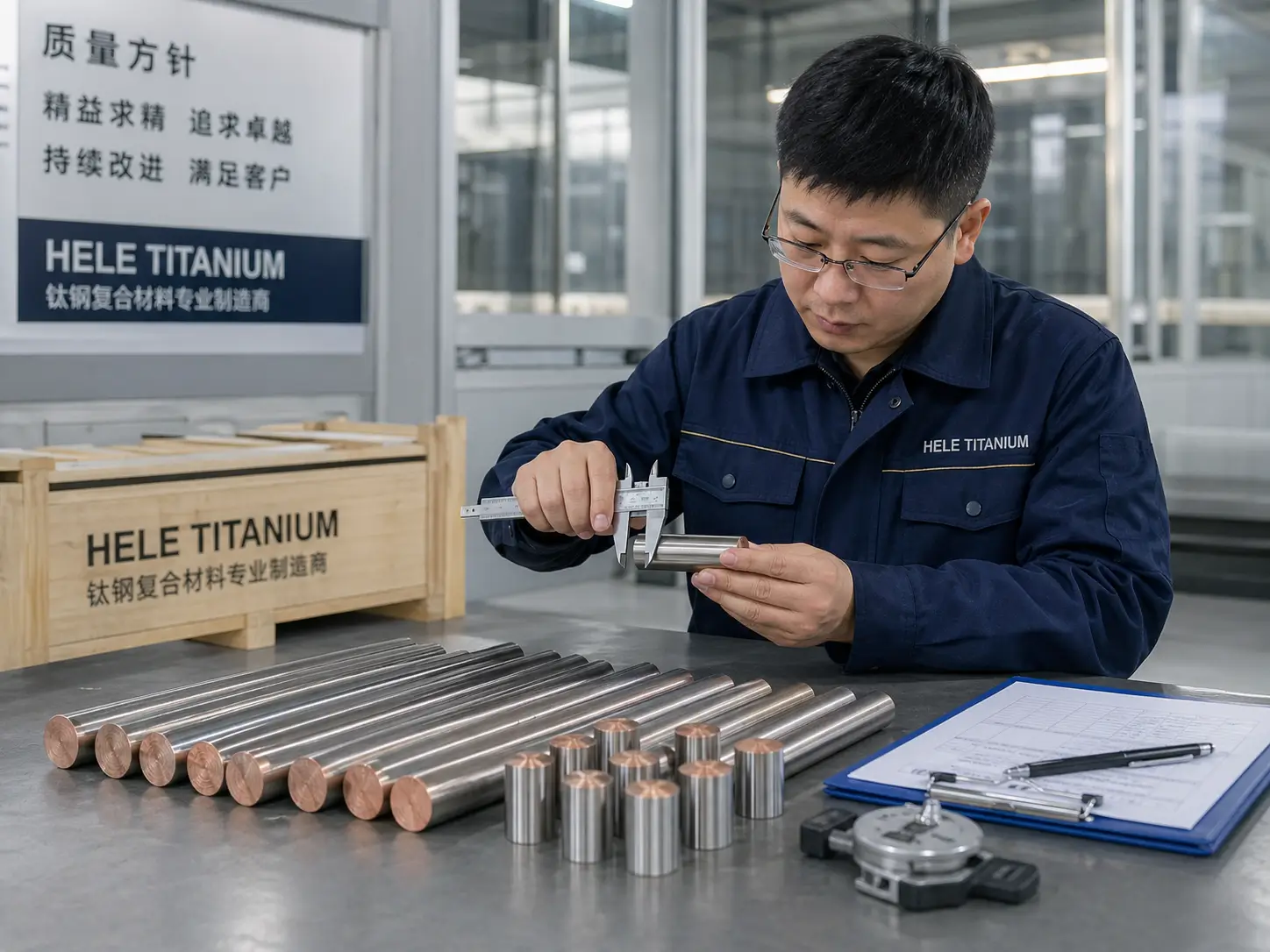
A look inside the production areas where Ti-Cu conductors are bonded, machined, inspected, and prepared for shipment.
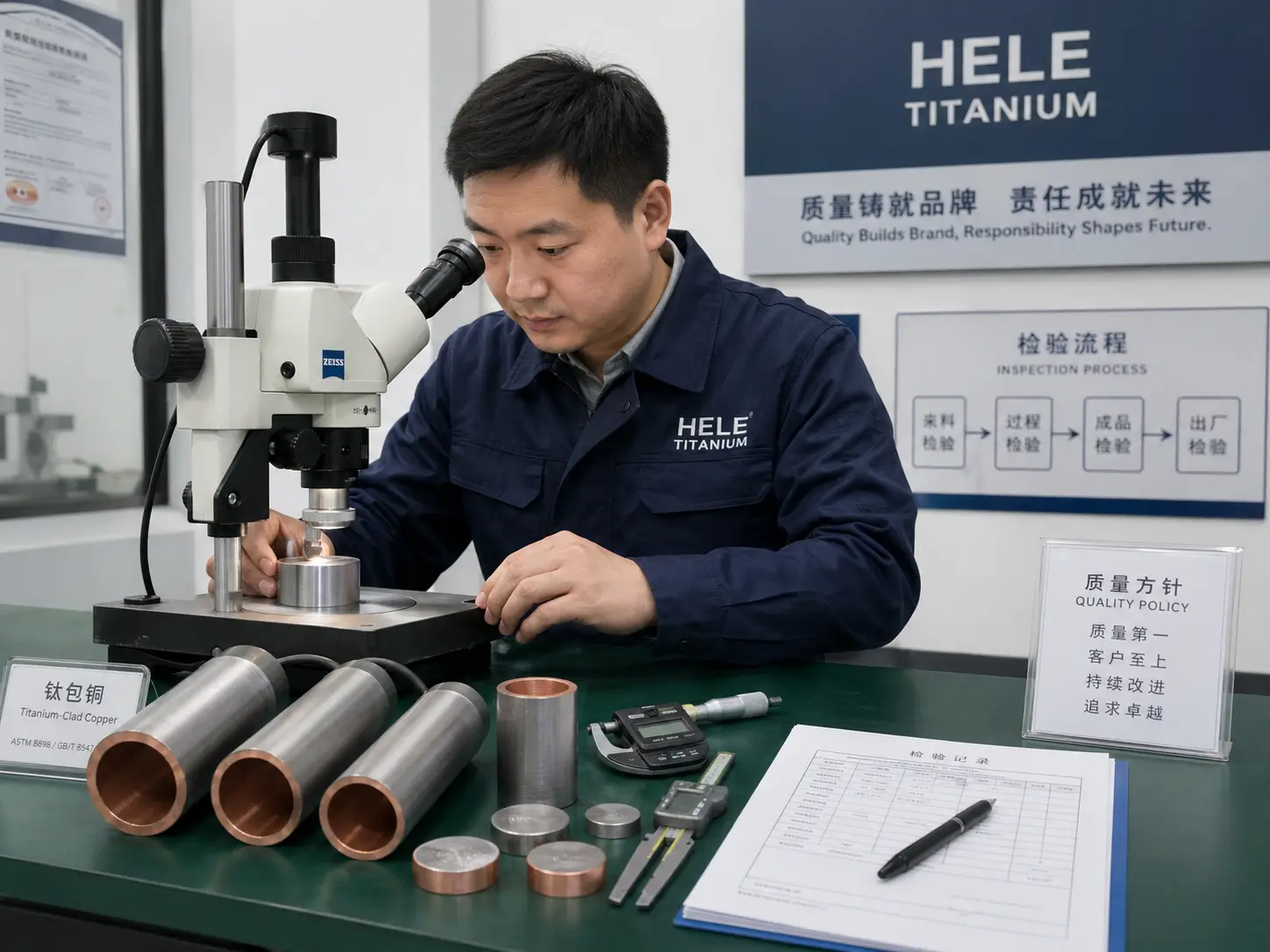
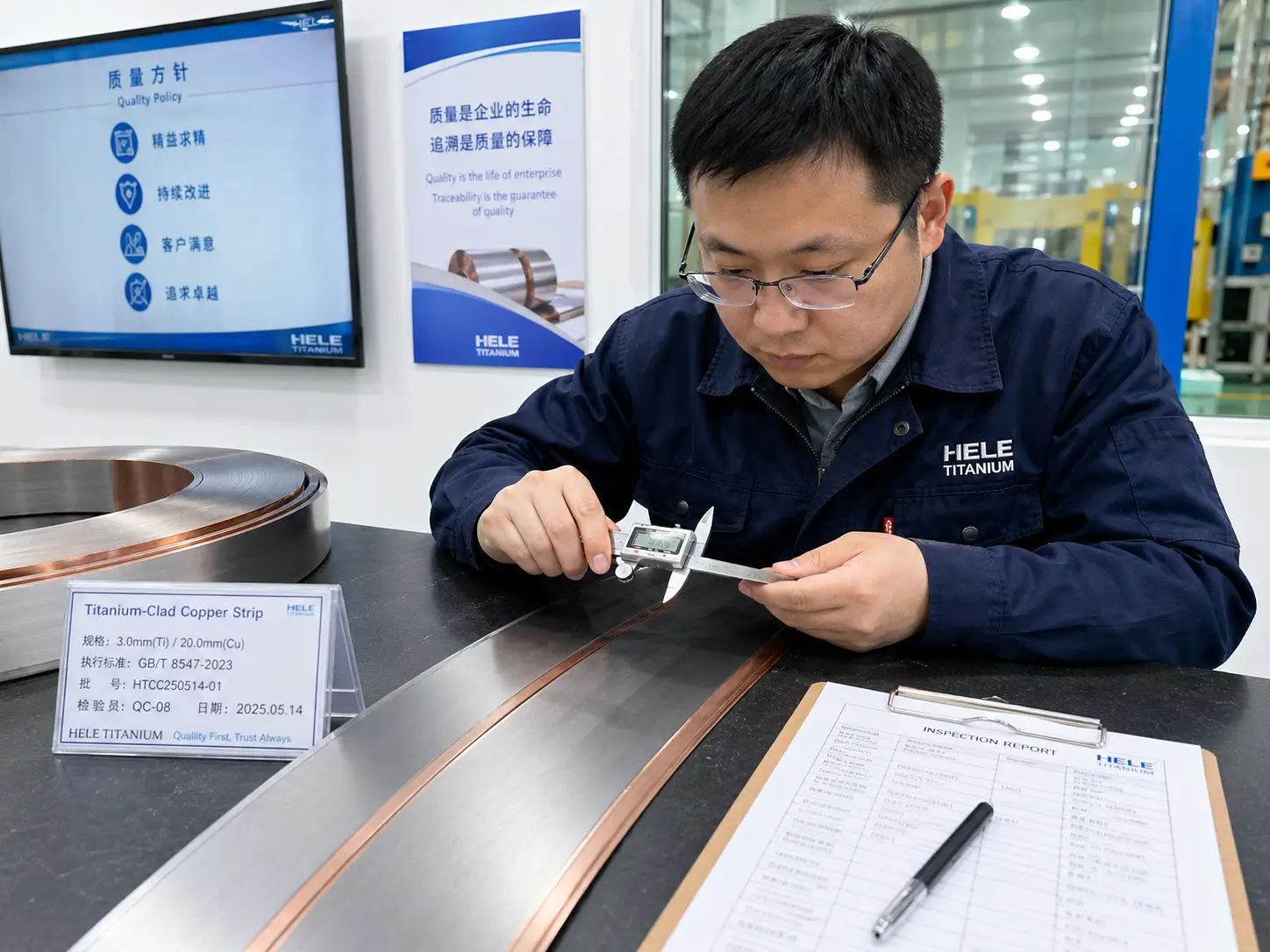
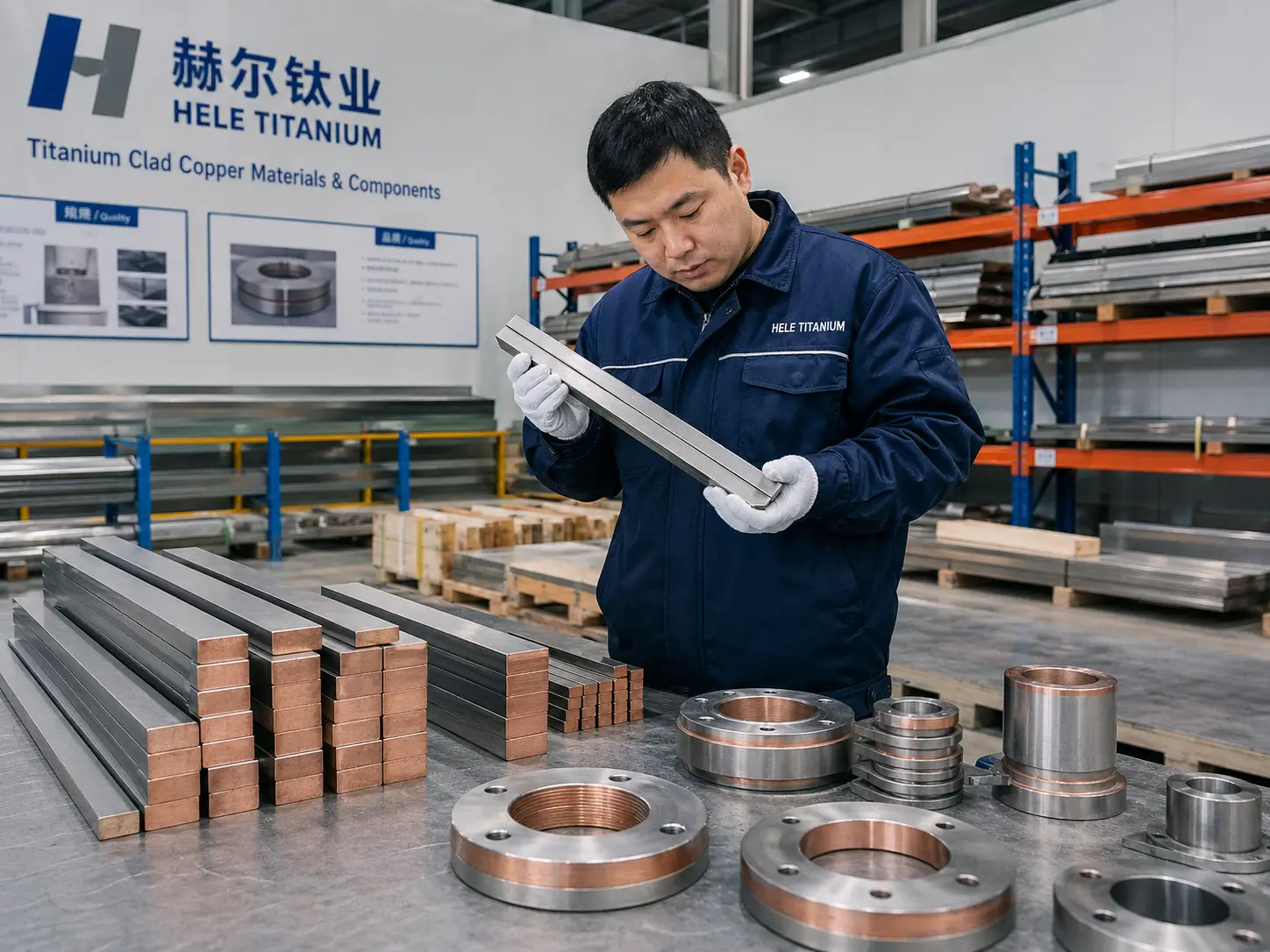
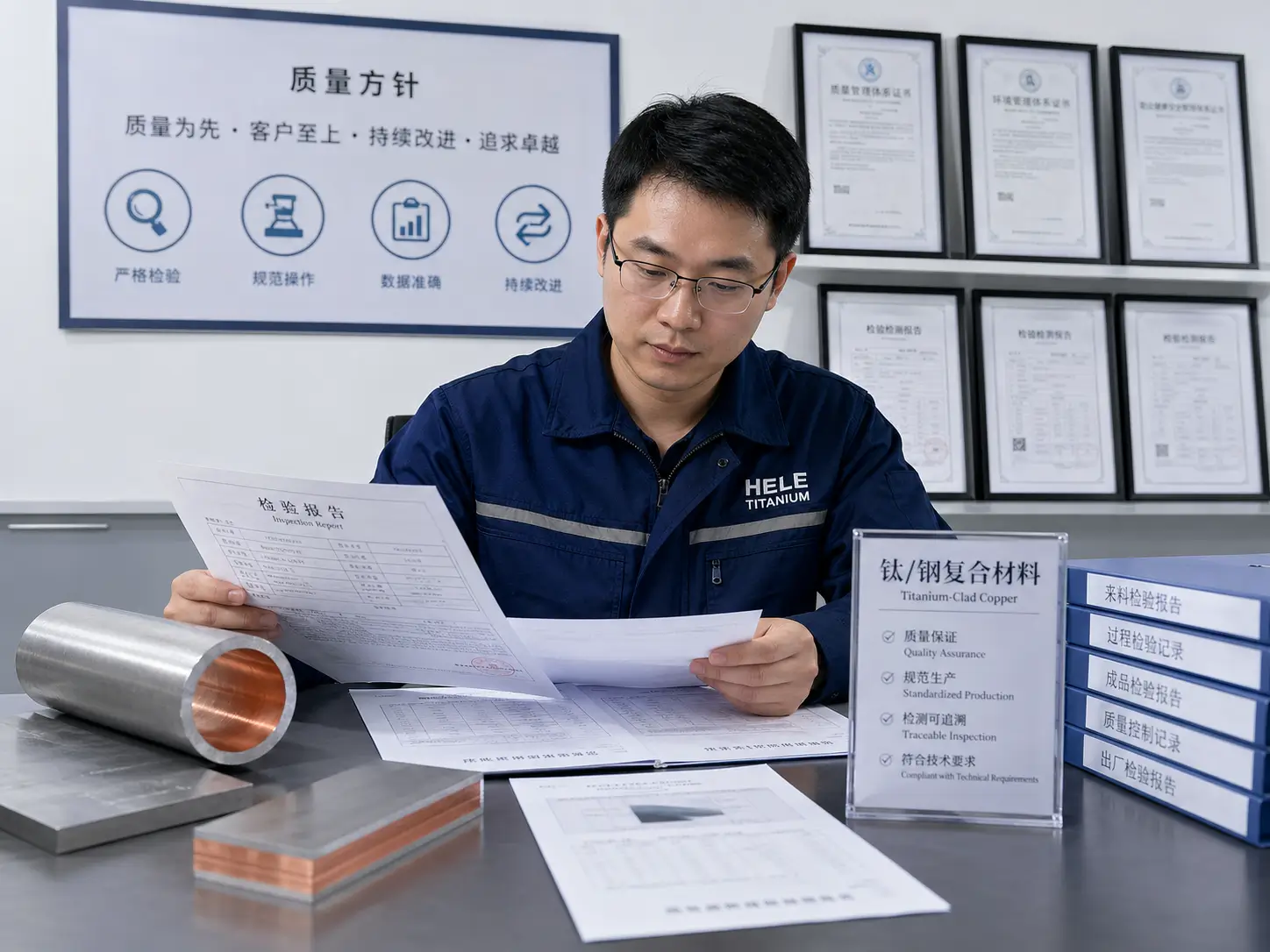
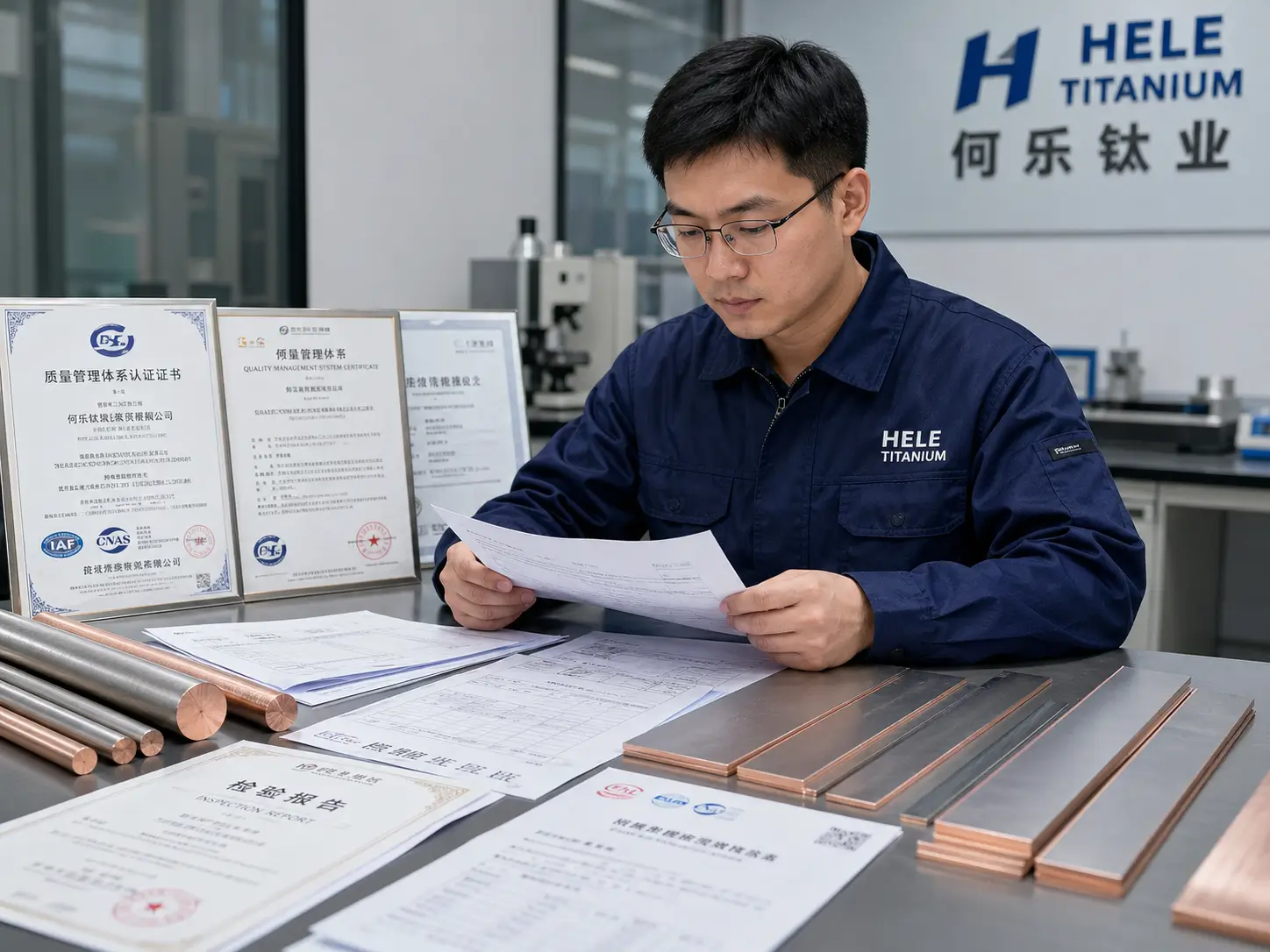
Our inspection system verifies bond integrity, material identity, cladding thickness, electrical continuity, and dimensional accuracy before shipment.
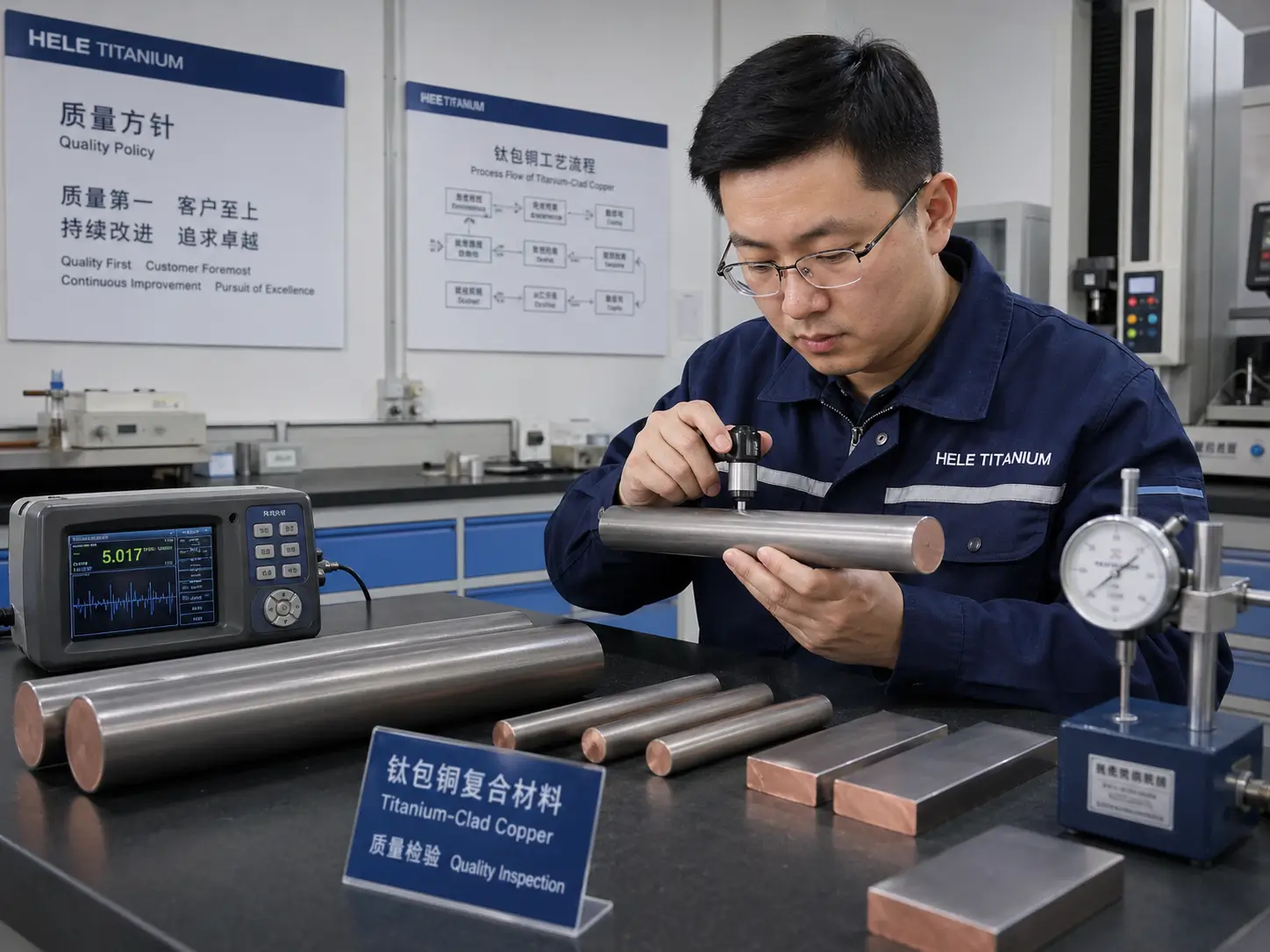
Documentation and traceability are essential for electrochemical systems, high-amperage conductors, and long-life industrial infrastructure.

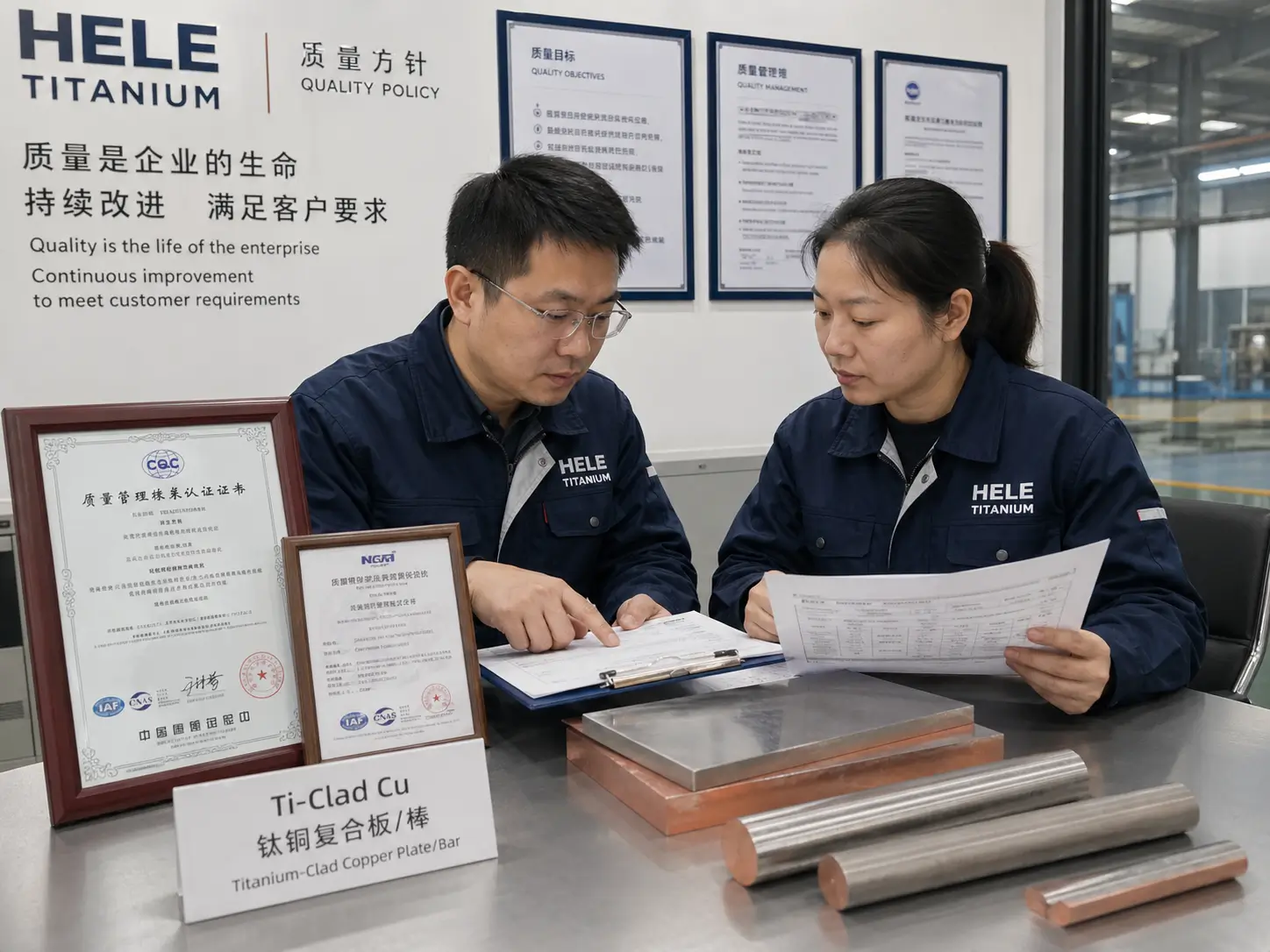
Need production photos, inspection records, or documentation support? Contact our team for direct factory assistance.
Engineering & Procurement Guide: Titanium-Clad Copper (Ti-Cu)
Titanium-clad copper is the definitive composite solution for high-amperage systems operating in aggressive media. This guide outlines the metallurgical bonding technologies, material-grade selections, and QA protocols required to ensure zero interface delamination and maximum electrical efficiency.
Before You RFQ Titanium-Clad Copper, Confirm These 3 Things
- • What geometry best fits your system: rod, bar, plate, busbar, strip, or custom machined profile?
- • What current load, conductivity target, and corrosion environment must the component withstand?
- • Which core grade, titanium grade, and cladding thickness are required for long-term reliability?
1. Core Engineering Advantages
Ti-Cu eliminates the fundamental conductivity-versus-corrosion trade-off. Solid copper provides excellent electrical transfer but is rapidly destroyed by acids, chlorides, and seawater. Solid titanium resists these environments flawlessly but is a poor conductor. By combining a highly conductive copper core with a chemically inert titanium shield via metallurgical bonding, engineers achieve a zero-compromise conductor for the most severe industrial applications.
2. Material Grade Selection Matrix
| Material | Role in Composite | Key Advantage | Best Use Case |
|---|---|---|---|
| C11000 (ETP Copper) | Conductive Core | High conductivity, cost-effective | Standard busbars, general electroplating |
| C10200 (OFHC Copper) | Conductive Core | Highest conductivity, hydrogen embrittlement resistant | High-end electrolyzers, extreme amperage systems |
| Grade 1 Ti | Outer Cladding | Highest ductility, easy forming | Complex profiles, thin cladding |
| Grade 2 Ti | Outer Cladding | Standard strength + excellent corrosion resistance | Majority of industrial applications |
| Grade 7 Ti (Pd-alloyed) | Outer Cladding | Immunity to reducing acids | Extreme chemical processing environments |
3. Advanced Metallurgical Bonding Technologies
A simple mechanical sleeve is insufficient for high-current applications due to air gaps that cause electrical resistance. We utilize Explosive Welding and Hot-Roll Bonding, often combined with hot extrusion and stretching for long rods. These processes create a true metallurgical weld at the atomic level, ensuring high interfacial shear strength and absolute electrical continuity.
4. Interfacial Integrity: Preventing Delamination
The #1 failure mode of poorly manufactured clad conductors is delamination—where the titanium separates from the copper due to thermal stress or poor bonding. We prevent this by strictly controlling the Intermetallic Compound (IMC) layer thickness during the thermal bonding phase, optimizing the Ti/Cu ratio, and verifying every piece with 100% Ultrasonic Testing (UT) to detect hidden voids.
5. Comparative Material Analysis
| Feature | Ti-Clad Copper | Solid Copper | Solid Titanium |
|---|---|---|---|
| Conductivity | Excellent (Core) | Excellent | Poor |
| Corrosion Resistance | Excellent (Shield) | Poor in Acids | Excellent |
| Total Cost of Ownership | Lowest (Long Life) | High (Replacement) | High (Power Loss) |
| Typical Logic | Ultimate synergy | Dry/safe zones only | Structural/low-current |
6. Available Product Geometries & Specifications
| Form | Typical Range | Cladding Thickness | Typical Use |
|---|---|---|---|
| Bars & Rods | Ø10mm – 100mm | 0.5mm – 3.0mm | Plating hangers, anodes |
| Plates & Sheets | 1mm – 50mm thick | 1.0mm – 5.0mm | Tank bases, structural contacts |
| Busbars | Up to 6m lengths | 1.0mm – 2.5mm | Power distribution networks |
| Custom Profiles | Per Drawing | Variable | Proprietary OEM assemblies |
7. Quality Control & International Compliance Standards
Production is guided by standards such as ASTM B898 (Reactive and Refractory Metal Clad Plate) and ASTM B432. The copper input aligns with relevant ASTM standards, while the titanium conforms to ASTM B265. Full traceability is maintained via EN 10204 3.1 certification, supported by rigorous dimensional and electrical continuity verification.
8. Industry-Specific Value Mapping
Whether it is preventing power loss in chlor-alkali electrolyzers, stopping acid corrosion in PCB plating lines, or ensuring lifelong continuity in marine grounding grids, Ti-Cu composites deliver measurable ROI by eliminating conductor replacement cycles and reducing energy consumption.
Optimize Your System’s Electrical Efficiency and Service Life
Hele Titanium provides end-to-end support for titanium-clad copper, from material-grade selection to finished conductor fabrication, helping OEMs and plant engineers reduce corrosion risk, current loss, and lifecycle cost.
Get Your Titanium-Clad Copper Solution
Tell us your required Ti-Cu form, copper core grade, titanium cladding grade, wall thickness, current load, application environment, and machining requirements. Our team will recommend the most suitable bonded composite solution for your system.
-
✓Advanced Metallurgical Bonding
-
✓High-Conductivity + Corrosion Resistance
-
✓UT, MTC & Full Traceability Support
Direct Contact:
sales@heletitanium.com
Titanium Valley, Baoji City ,Shaanxi Province, China